Few topics in barbecue create more arguments than whether meat should be wrapped during a cook.
Ask ten people and you will usually get ten strong opinions. Some will tell you wrapping is necessary if you want tender, juicy meat. Others will say wrapping ruins bark and turns good barbecue into something softer and less interesting. Both sides often talk as if there is one correct answer, when in reality they are usually prioritizing different results.
That is why this debate never seems to go away.
At its core, the wrap versus no wrap discussion is not really about foil, butcher paper, or even the meat itself. It is about what people believe barbecue should be. For some cooks, barbecue is about control, consistency, and repeatable results. For others, it is about process, patience, and letting the pit do its work with as little interference as possible. Wrapping sits right in the middle of that divide, which is why it gets so much attention.
Once you understand what wrapping actually does, the argument becomes a lot more practical.
Why This Debate Exists in the First Place
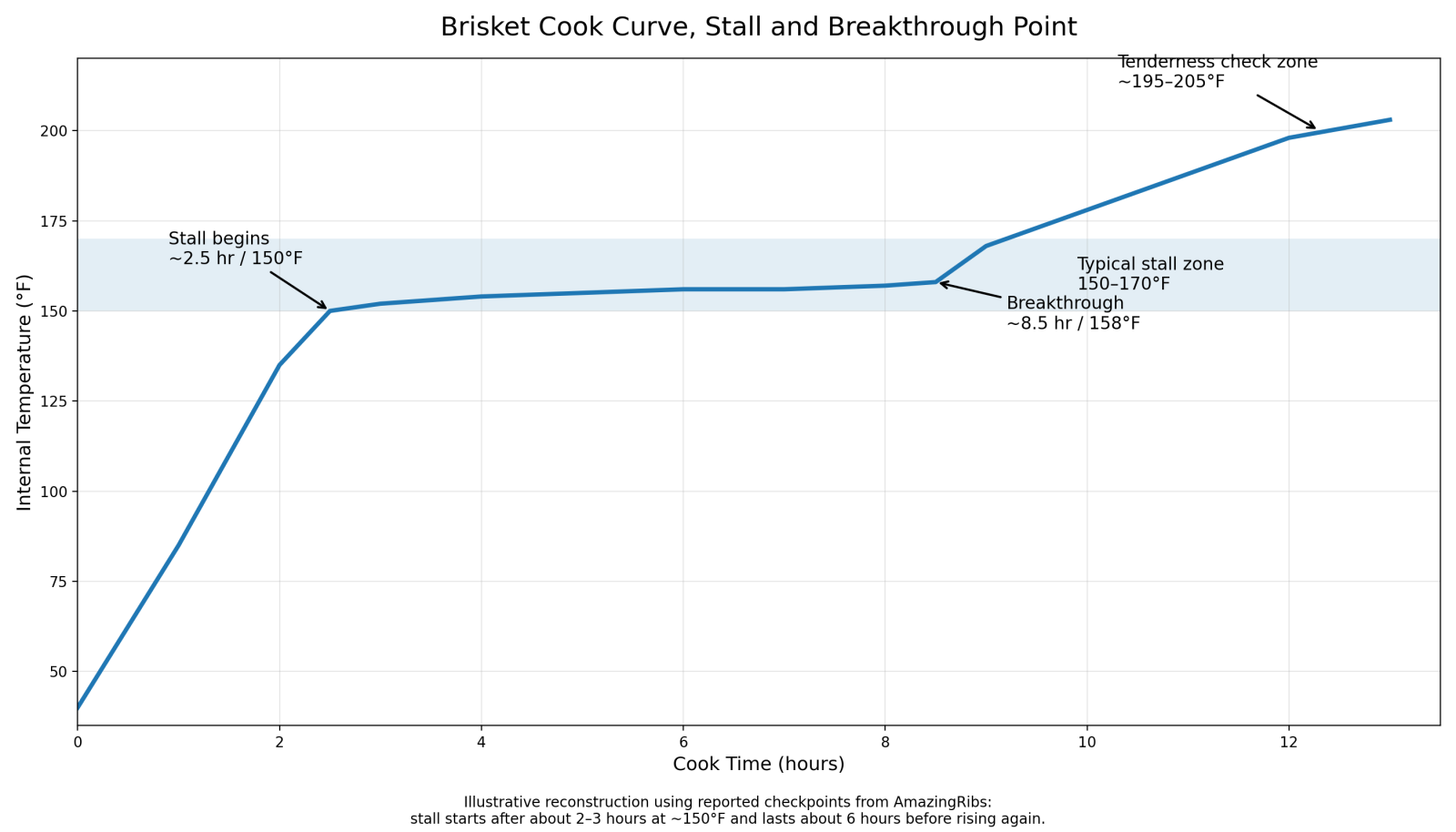
Large cuts like brisket, pork shoulder, and ribs all go through a stage in the cook where progress seems to slow dramatically. Pitmasters call this the stall. The internal temperature climbs steadily, then suddenly appears to stop moving for what can feel like hours.
That is usually the moment when the wrap versus no wrap decision enters the picture.
The stall happens because moisture on the surface of the meat begins to evaporate. That evaporation cools the meat, much like sweat cools skin. Even though the smoker is still applying heat, a significant part of that energy is being used to drive off moisture instead of raising the internal temperature.
Wrapping interrupts that process. Once the meat is wrapped, evaporation drops off, the cooling effect is reduced, and the internal temperature can begin rising again more efficiently.
That is the foundation of the entire debate. Wrapping changes how the meat handles heat and moisture. Everything else follows from that.
What Wrapping Actually Does
A lot of myths get attached to wrapping. Some people talk about it as if it magically makes meat tender. Others treat it as if it ruins barbecue by definition. Neither view is especially useful.
Wrapping is a control tool.
When meat is wrapped, moisture loss from the surface slows down, the stall becomes shorter or less severe, and the environment around the meat becomes more humid. Those changes can be a real advantage on a long cook. Wrapping helps protect the meat from drying out too early, makes timing more predictable, and gives connective tissue more time to break down without the exterior taking as much punishment.
But there is a tradeoff.
The same enclosed environment that protects moisture also softens bark. Bark forms when the surface dries, darkens, and develops texture over time. When you wrap, especially in a tight material, you reduce the conditions that help that happen.
So wrapping does not simply make barbecue better. It improves some aspects while giving up others.
What Happens When You Do Not Wrap
Cooking without wrapping keeps the meat exposed to smoke, airflow, and heat for the entire cook. That lets bark continue to develop without interruption.
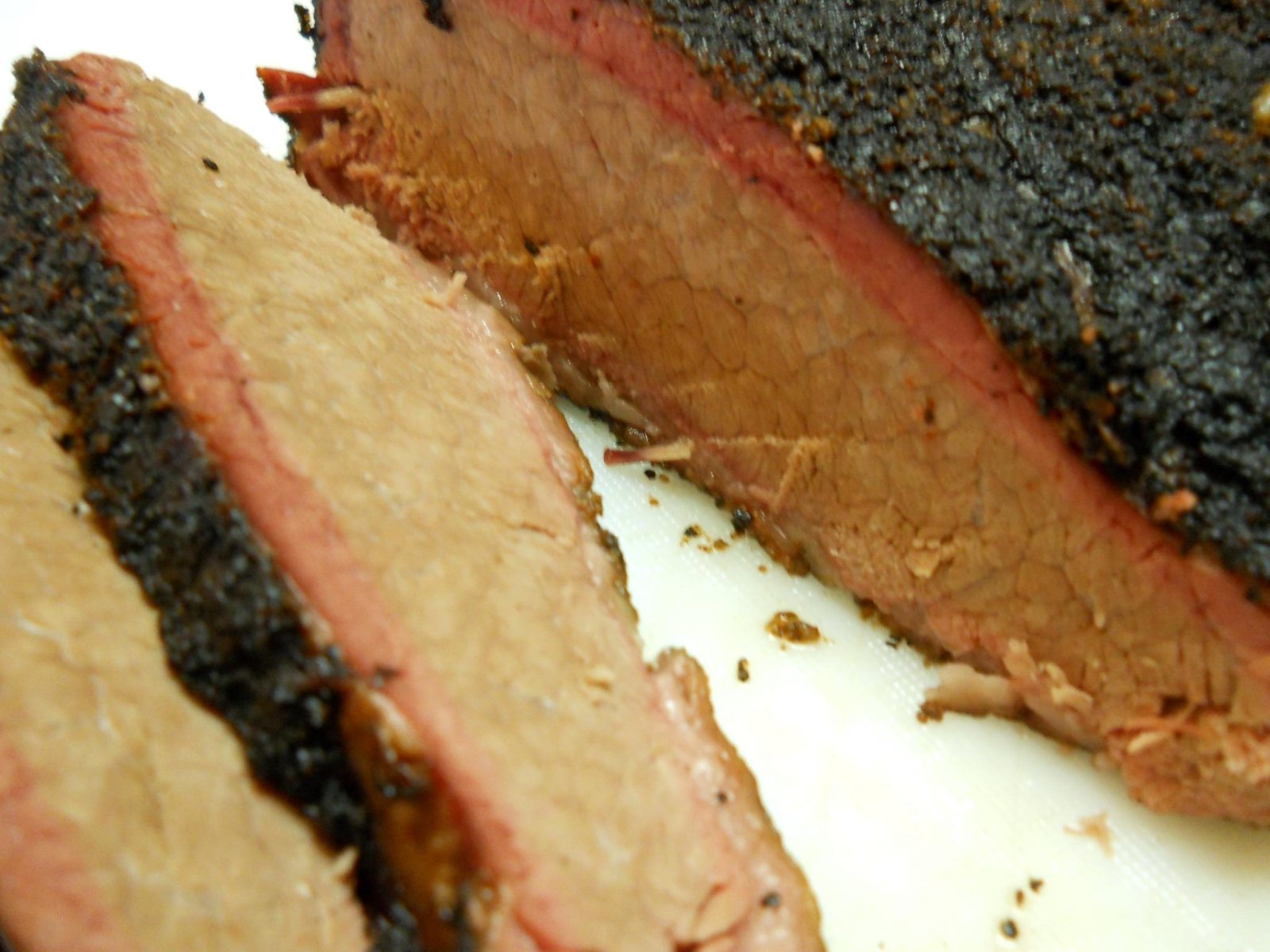
A well-cooked unwrapped brisket or pork shoulder often has a stronger bark, a firmer exterior, and more contrast between the outside and the inside. For many cooks, that contrast is a big part of what makes barbecue satisfying.
There is also a certain simplicity to the method. You put the meat on the pit and let it run.
But no wrap also comes with its own costs. The cook usually takes longer, fire control matters more, and there is less room for error. If your pit runs hot, dry, or uneven, the meat is exposed to those conditions the entire time.
No wrap is not automatically better. It just puts more emphasis on bark and texture.
Foil and Butcher Paper Are Not the Same Thing
One reason this debate gets muddy is that people often talk about all wrapping as if it produces the same result. It does not.
Foil is the more aggressive option. It seals everything in, including moisture, rendered fat, and heat. That makes it very effective at pushing through the stall and protecting the meat. It also softens bark the fastest.
Butcher paper sits somewhere in the middle. It still protects the meat, but it breathes. That means some moisture can escape while the wrap still helps the cook move along. The result is usually more bark retention than foil, with more protection than going fully unwrapped.
That is why many cooks prefer butcher paper for brisket. It gives them a middle ground.
Real-World Example: Brisket
Brisket is one of the clearest examples of how this decision changes the cook.
A full packer brisket will almost always hit a long stall. If you leave it unwrapped, the stall can drag on for hours, bark continues to build, and the cook takes longer. If you wrap it, the stall shortens, the flat gets more protection, and the cook becomes easier to control.
That is why many experienced brisket cooks do not treat this as an either-or choice. They often run the brisket unwrapped early so bark has time to develop, then wrap once the bark is set and the stall begins to slow things down.
That approach gives you a better balance. You get bark development early, more predictable timing later, and extra protection for the flat, which is usually the part most likely to dry out.
Foil will move things along faster, but it will soften bark more. Butcher paper works more gently and usually preserves more texture. The better choice depends on your pit, your schedule, and what kind of final result you want.
Does Wrapping Make Meat More Tender?
This point gets confused all the time.
Wrapping does not create tenderness by itself. Tenderness comes from collagen and connective tissue breaking down over time at the right temperatures.
What wrapping does is help the meat stay in that process without drying out as quickly. It reduces evaporative cooling, slows moisture loss, and makes the cook easier to manage. In that sense, it supports tenderness, but it is not the source of tenderness.
That is why unwrapped cooks can still turn out excellent. If the cook is managed correctly, the meat will still get tender. It just takes more time and more control.
When Wrapping Makes the Most Sense
Wrapping makes the most sense when consistency matters more than maximizing bark. It is useful when you are cooking for guests, working on a schedule, or dealing with a pit that runs dry and harsh. It can also help when a cut seems vulnerable to drying out before it finishes properly.
In those situations, wrapping is not a shortcut in the lazy sense. It is simply the practical choice.
When No Wrap Makes the Most Sense
No wrap makes the most sense when bark is the priority and time is less important. If you trust your pit, know how to manage the cook, and want a firmer exterior with more texture, staying unwrapped can produce a better result in those specific ways.
It asks more from the cook, but it can also reward that extra attention.
The Best Method Depends on the Meat
Not every cut behaves the same way.
Brisket often benefits from some protection, especially the flat. Pork shoulder is more forgiving and can do well either way. Ribs change significantly when wrapped and can move toward a softer, almost braised texture that some people like and others do not.
That is one reason this debate never really gets resolved. People are often talking about different meats, different pits, and different goals while acting like they are discussing the same situation.
Common Mistakes When Wrapping
The most common mistake is wrapping too early. If the bark has not set yet, wrapping traps in moisture before the surface has had time to develop properly. That often leaves the meat with a soft exterior that never really recovers.
Another mistake is wrapping based only on temperature. Numbers like 165°F can be useful reference points, but they are not rules. Meat does not care about a tidy number. The condition of the bark matters more than the reading by itself.
Leaving meat wrapped too long, especially in foil, is another easy way to ruin texture. The longer it sits in that environment, the more the bark softens. If that starts happening, unwrapping for the final stage of the cook can help firm it back up.
Resting can also cause problems. If you pull the meat and leave it tightly wrapped right away, carryover cooking can keep pushing further than you want. Letting some heat vent before the rest can help prevent that.
And finally, wrapping is not a guarantee. You can still dry out meat if the pit is running too hot, if the cook goes too long, or if the meat is simply taken too far. Wrapping reduces risk, but it does not erase it.
What the Debate Really Comes Down To
At its core, this is not about right or wrong. It is about what you want the final product to be.
If you want more bark, stay unwrapped longer. If you want more control and more predictable timing, wrap it. If you want a balance of both, build bark first and wrap later.
The best cooks are usually not the ones arguing about it the loudest. They are the ones who understand what each method does and use it when it makes sense.
Final Thoughts
Barbecue has always had strong opinions attached to it, and wrapping is one of the loudest examples.
But once you strip away all the posturing, the issue becomes simple. Wrapping is a tool. Not using it is also a choice. Knowing what each one does, and when to use it, is what separates guesswork from control.
Keep learning