Chuck roast doesn't have to be just another pot roast. Give it a good dusting of PyroDust Steak Seasoning, let it spend some time over cherry smoke, then finish it in a covered braise. You get the color and flavor of barbecue with the tenderness of slow-cooked beef, and it's especially good sliced thin for sandwiches.
Start with Cherry Smoke
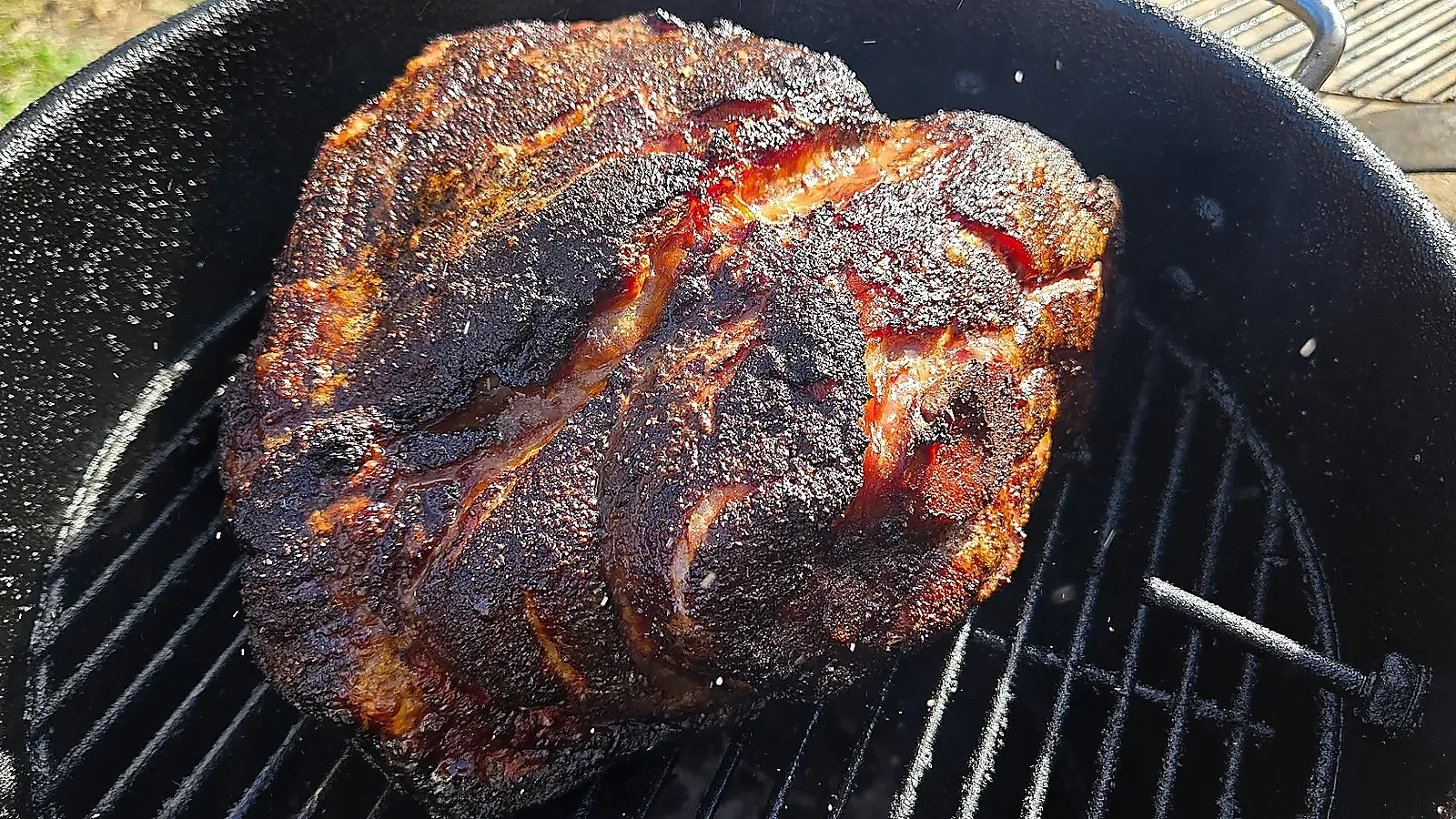
For this cook I used a roughly 3 1/2-pound boneless chuck roast. I dusted it with PyroDust Steak Seasoning, with no binder, and set up the Weber kettle for indirect cooking with charcoal and cherry wood.
The first stage was about an hour on the kettle. I wasn't trying to cook the roast all the way through at this point. I wanted it to pick up some smoke and develop that deep mahogany color before moving into the braise.
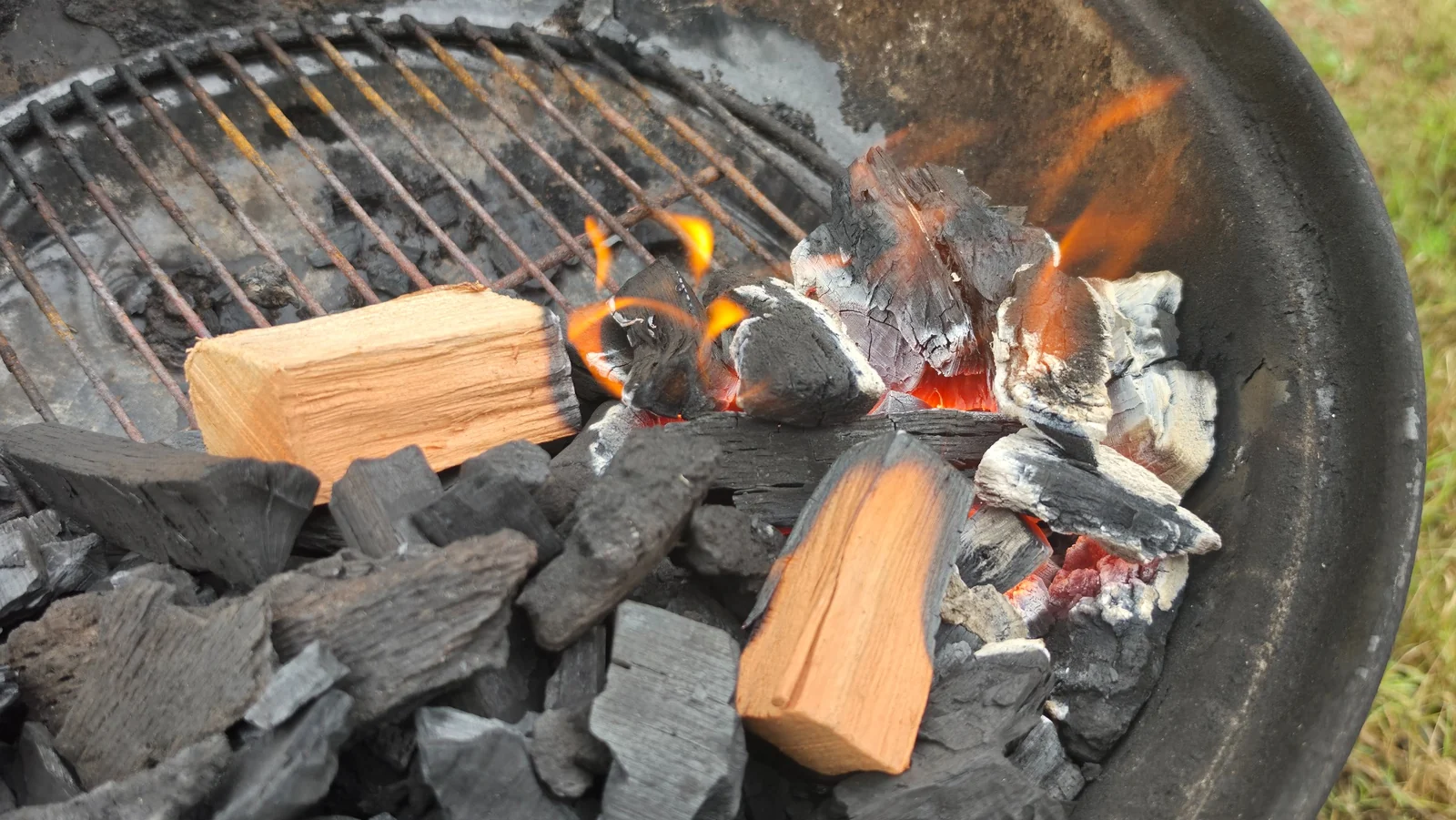
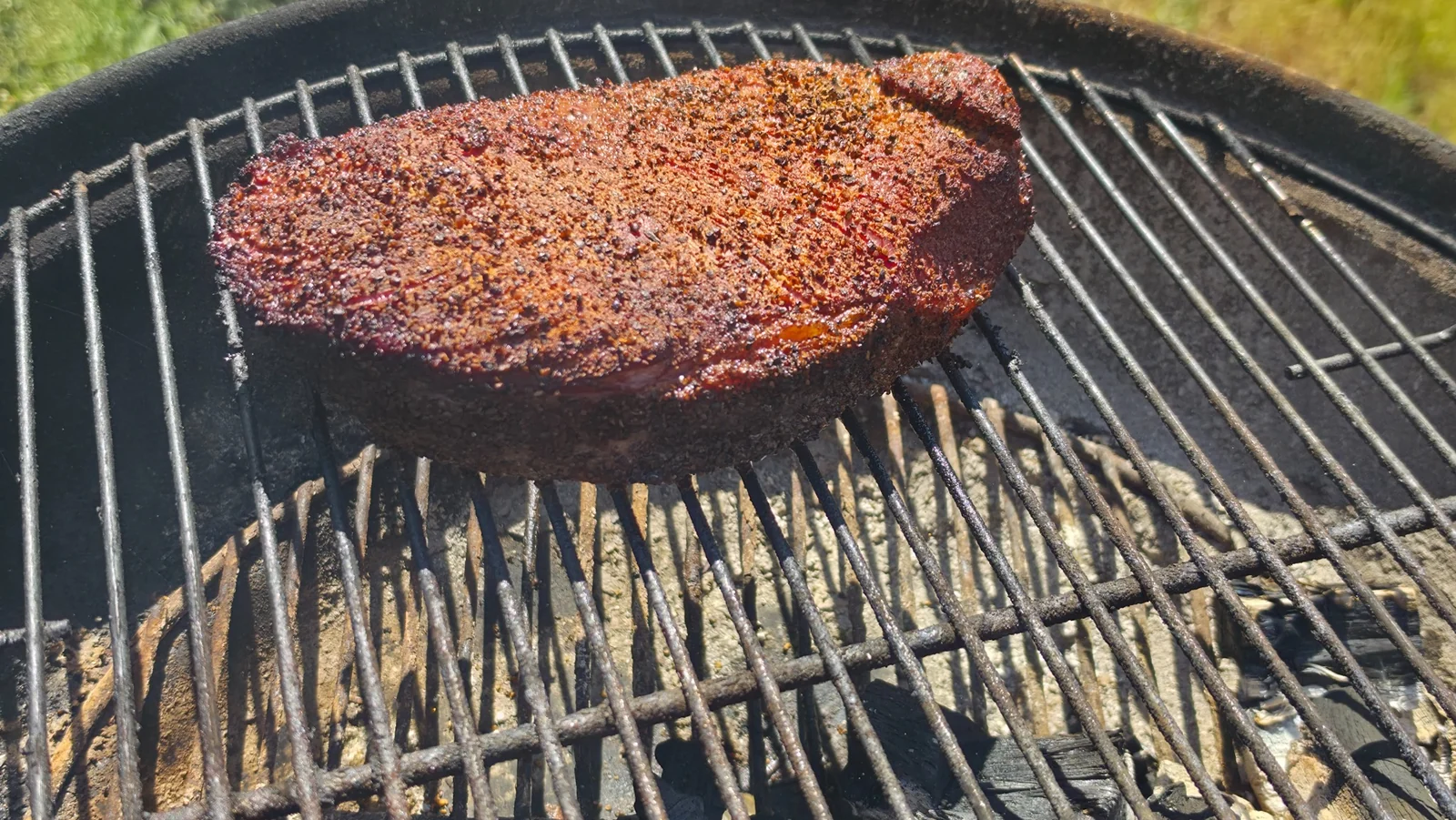
About the temperature: I didn't record the kettle temperature on this particular cook. For anyone following the recipe, 250–275°F is a reasonable target for indirect smoking and the covered braise. Treat that as a recommended range, not a measured temperature from my cook.
Into the Braising Pan
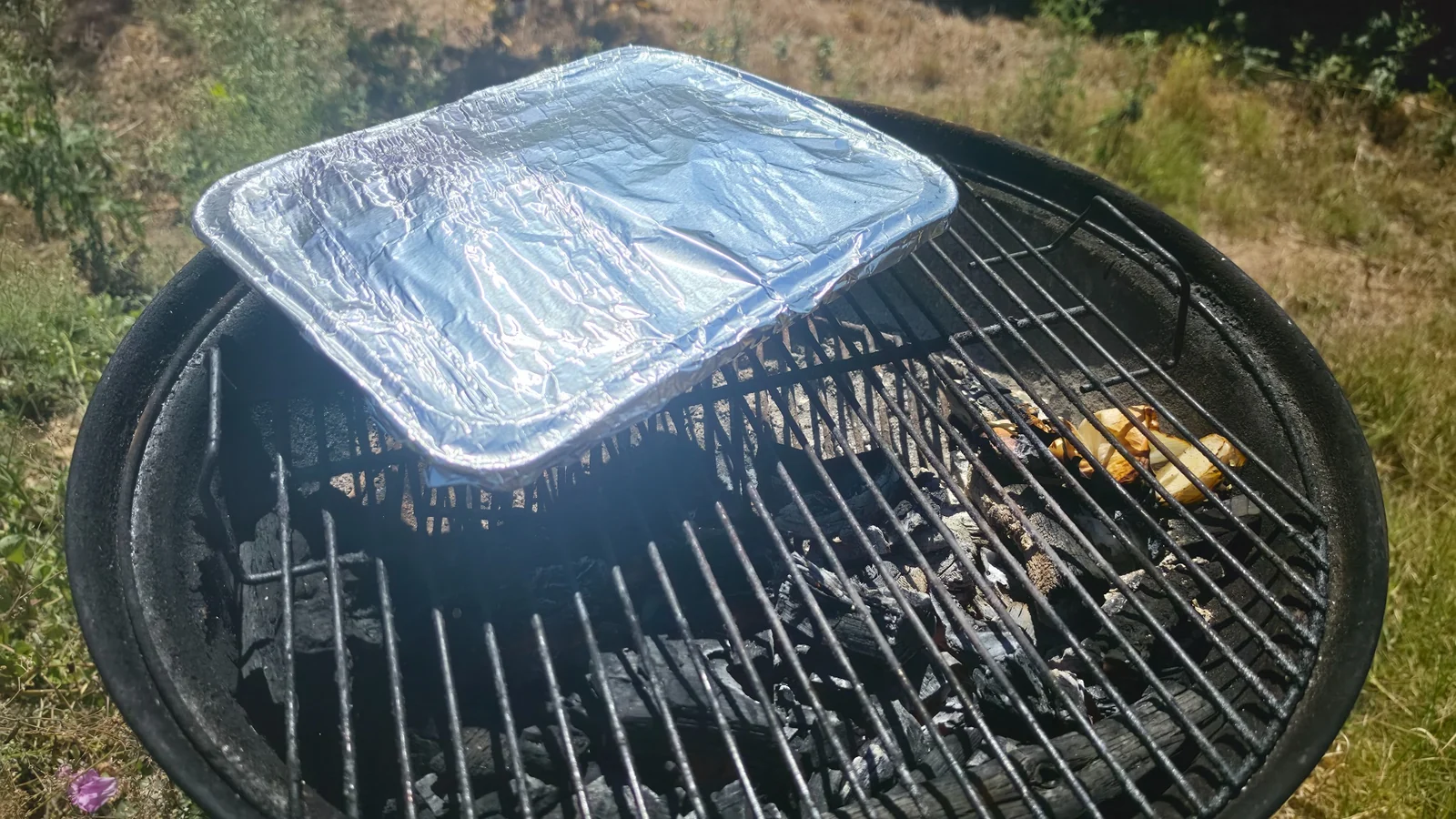
Once the roast had taken on smoke and color, I transferred it to a foil pan with beef bone broth, Shaoxing wine, light soy sauce, Worcestershire sauce, and a couple sprigs of rosemary. It's a simple combination, but it brings a lot of savory flavor to the beef.
The liquid came about halfway up the sides of the roast. I covered the pan tightly with foil and left it on the kettle to finish. That matters: this is a braise, not a roast submerged in a pot of boiling liquid.
Cook for the Texture You Want
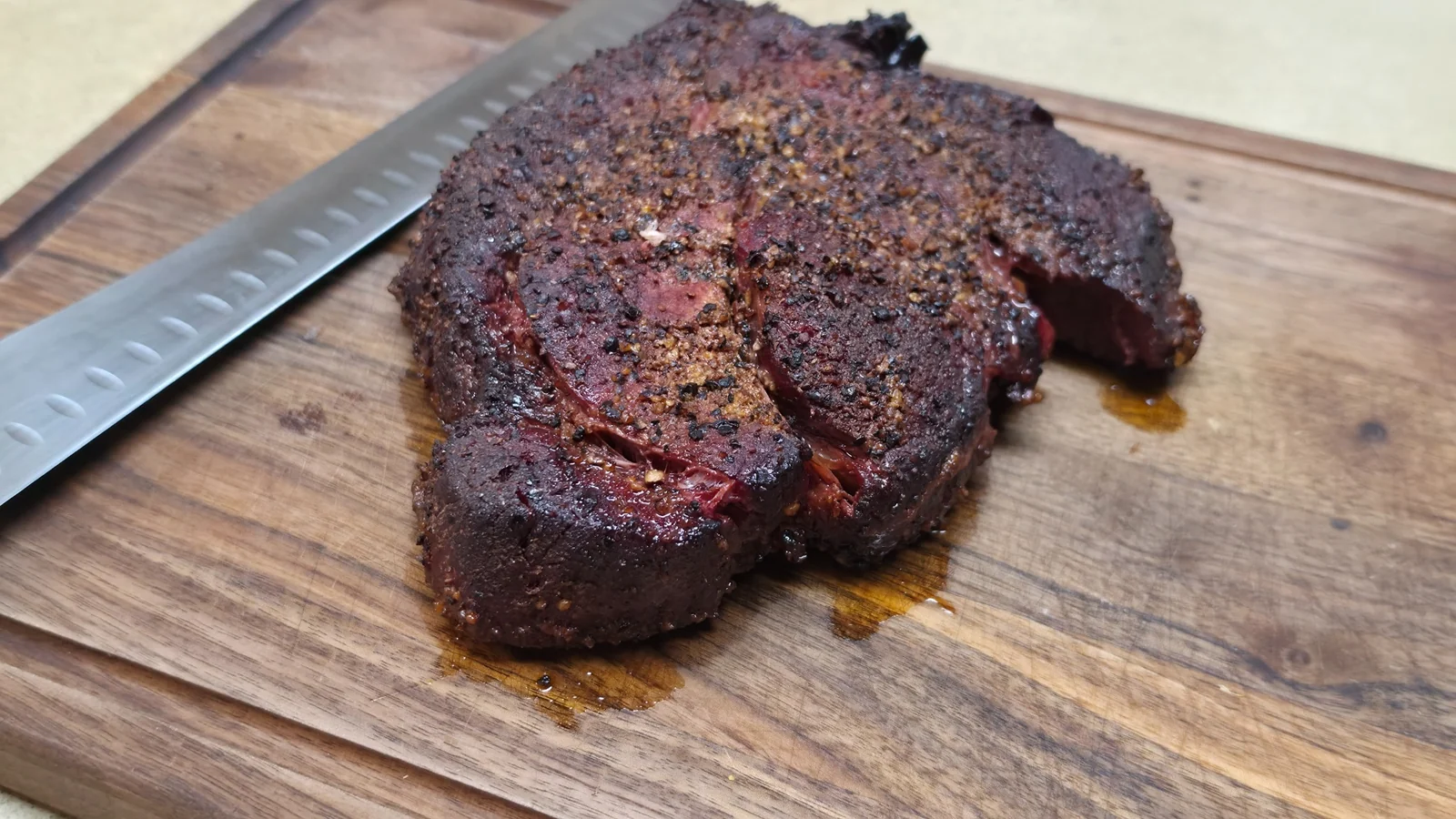
Start checking the roast after about two hours in the covered pan. A probe should slide into the meat with little resistance when it's tender enough. The exact timing will depend on the roast, the kettle temperature, and how tender you want the beef.
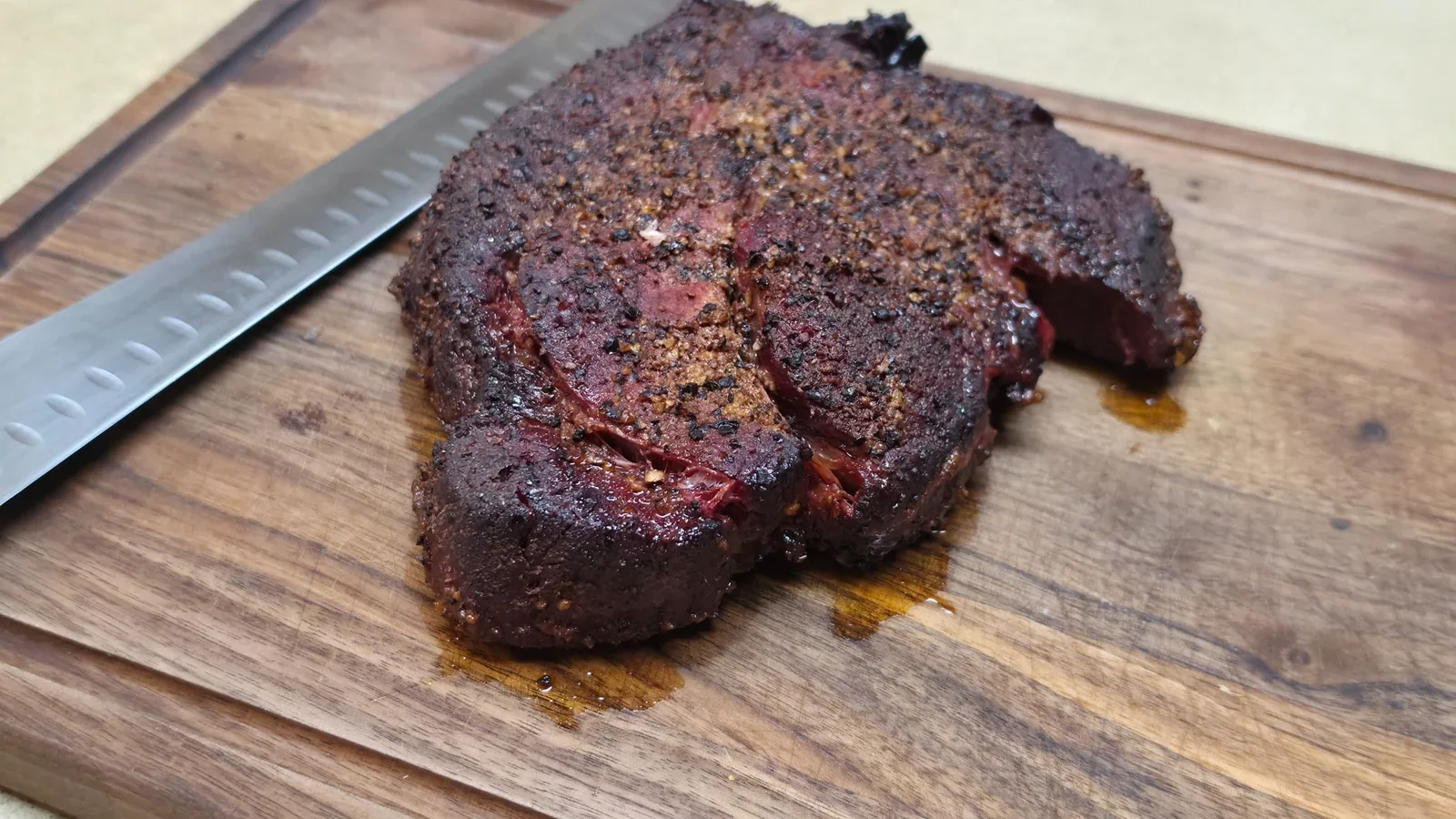
For this cook I wanted beef that would hold together for thin slices, not a pile of shredded meat. After a very short rest, if any, I sliced it for roast beef sandwiches. If shredded beef is the goal, continue cooking until it pulls apart easily.
Don't Throw Away the Braising Liquid
That pan liquid is full of beef flavor. One option is to strain it, skim off excess fat, and use it as a dipping jus or spoon a little over the sliced meat. You can also reduce it for a stronger flavor, but taste as you go: the soy sauce and Worcestershire already bring salt to the party.
For leftovers, refrigerate the beef with some of the cooking liquid so it stays moist when reheated. Cool it promptly in shallow containers, refrigerate within two hours, and use within three to four days or freeze it.
From Chuck Roast to Beef-and-Cheddar Sandwiches
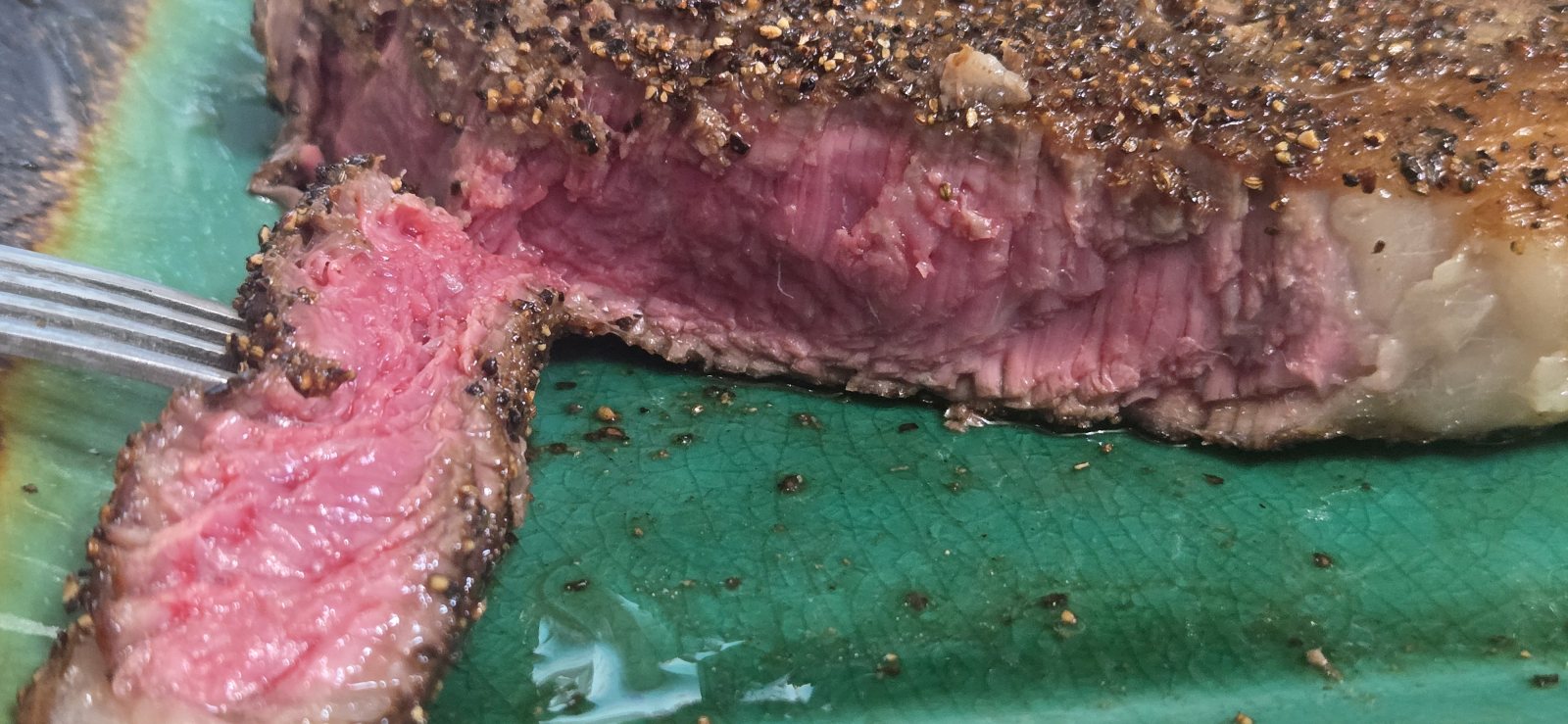
The payoff for this particular roast was thinly sliced beef piled onto a sesame bun with cheddar, pickles, and onion. A little of that braising liquid is also a good way to warm the slices without drying them out. It's a great use for the roast, but the same beef would work on its own alongside your favorite sides.
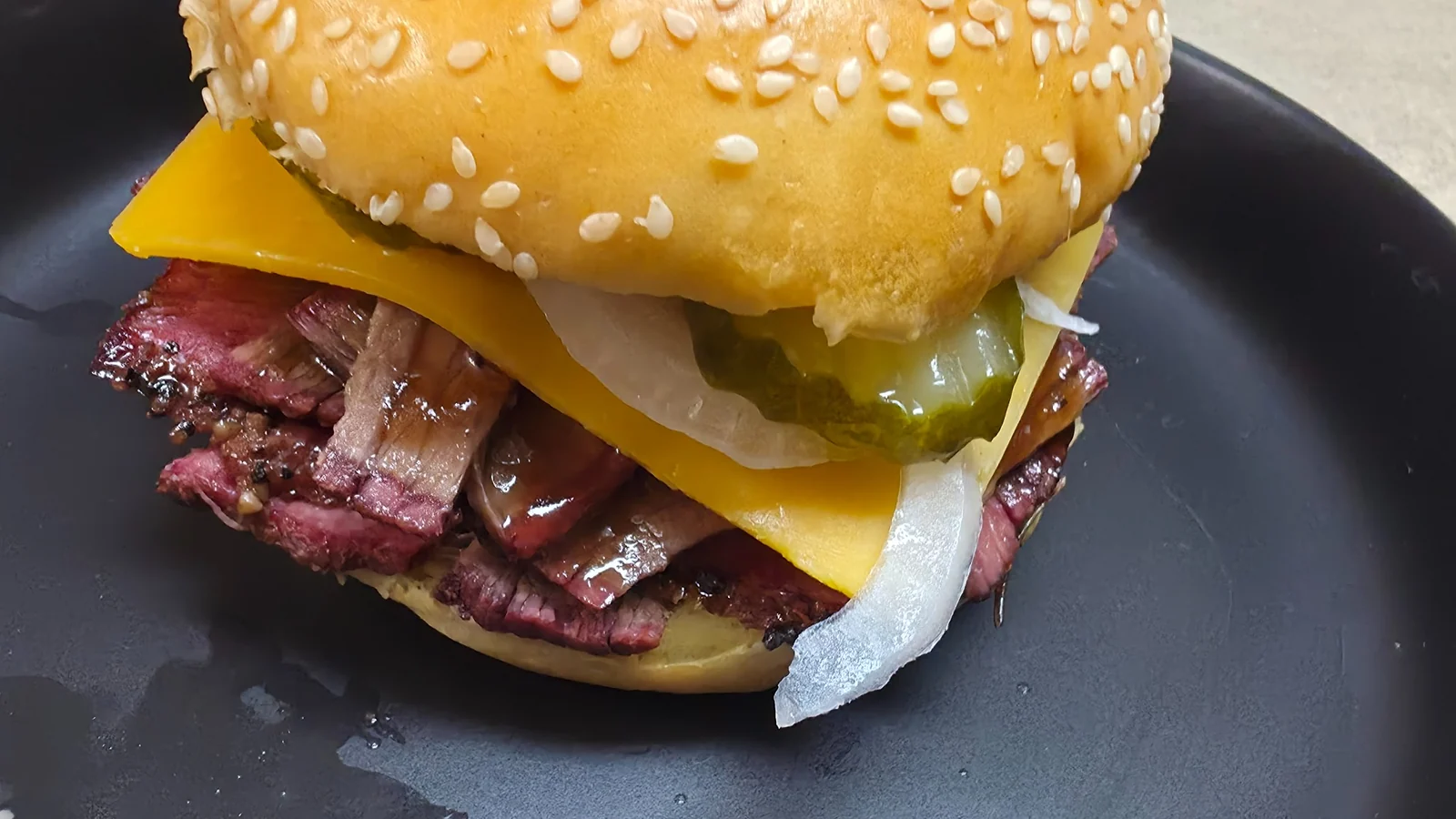
Cherry-Smoked & Braised Chuck Roast
Boneless chuck roast seasoned with PyroDust Steak Seasoning, smoked over cherry wood, and finished in a savory covered braise for tender sliced beef.
Ingredients
- 1 boneless chuck roast, approximately 3 1/2 lb
- PyroDust Steak Seasoning, to taste
- Cherry wood chunks, for smoking
- Approximately 2 cups beef bone broth
- Approximately 1/4 cup Shaoxing wine
- Approximately 2 tablespoons light soy sauce
- Approximately 2 tablespoons Worcestershire sauce
- 2 sprigs fresh rosemary
Instructions
- Set up a Weber kettle or other charcoal cooker for indirect heat. A suggested cooking range is 250–275°F. Add cherry wood for smoke.
- Dust the boneless chuck roast with PyroDust Steak Seasoning. No binder is needed.
- Place the roast over indirect heat and smoke for approximately 1 hour, until it has picked up smoke and developed a rich exterior color.
- Transfer the roast to a foil pan. Add the bone broth, Shaoxing wine, light soy sauce, Worcestershire sauce, and rosemary. The liquid should reach approximately halfway up the roast; pan size can affect the depth.
- Cover the pan tightly with foil and return it to the kettle over indirect heat.
- Begin checking for tenderness after approximately 2 hours of braising. Continue cooking as needed until a probe enters with little resistance.
- For sliced roast beef, remove the roast when tender but still able to hold together. Slice thinly across the grain. For shredded beef, continue braising until it pulls apart easily.
- Serve with a little of the braising liquid if desired, and save the remaining liquid for reheating leftovers or making a dipping jus.
Cook's Notes
Temperature: The 250–275°F range is a suggested target. The temperature during the original cook was not measured.
Timing: One hour of smoke and checking after two hours of braising reflect this cook. Continue until the texture is right rather than treating the clock as a finish line.
Salt: Steak Seasoning, soy sauce, and Worcestershire all contribute seasoning. Taste the braising liquid before reducing it.
Leftovers: Refrigerate the beef with some cooking liquid in shallow containers within two hours; use within 3–4 days or freeze.
Serving idea: Slice thinly for beef-and-cheddar sandwiches, or cook longer for shredded beef.
Watch the Cherry-Smoked Chuck Roast Short
Here's the quick look at the roast, from the cherry smoke to the finished beef.
Smoke for flavor, braise for tenderness, and decide whether you want thin slices or pulled beef. That's what makes a chuck roast so versatile on the kettle.
Keep learning