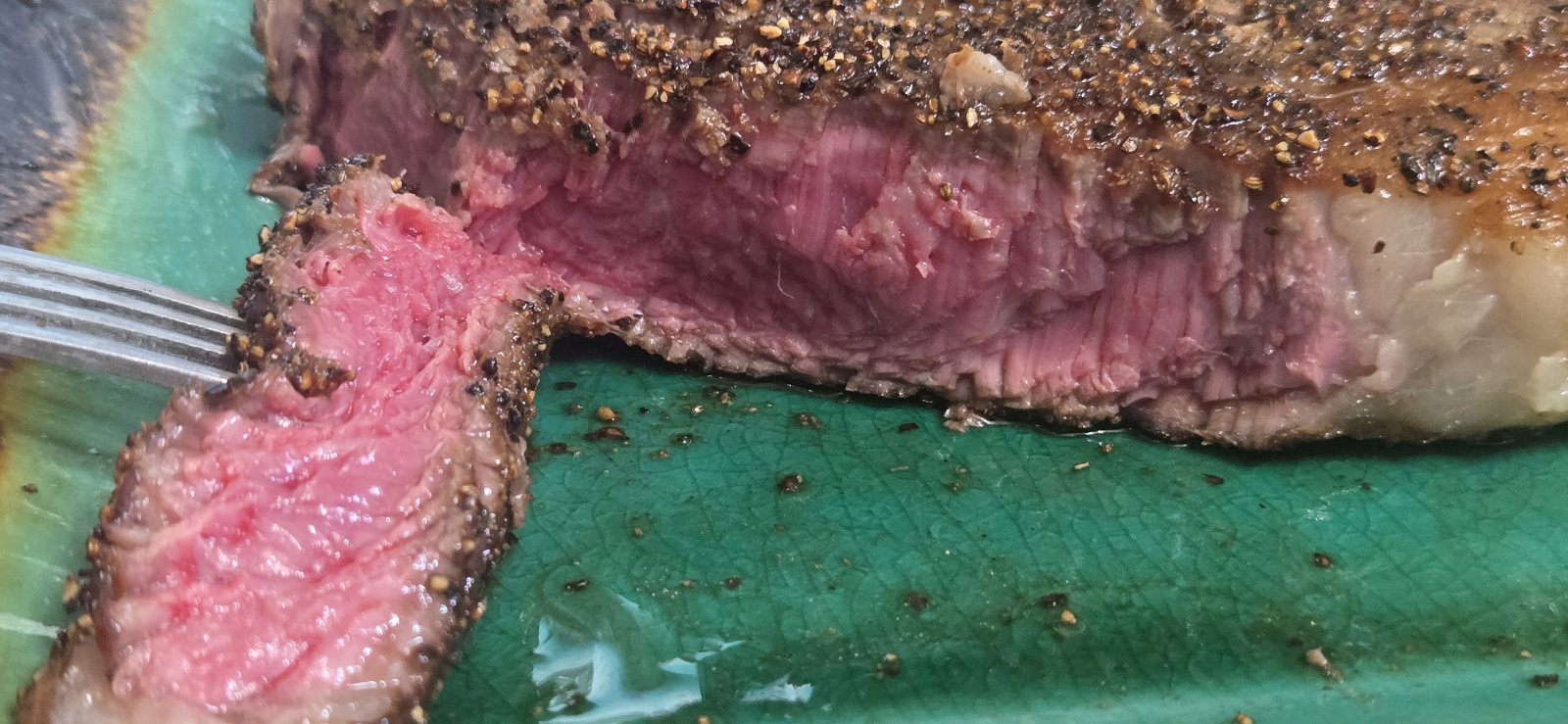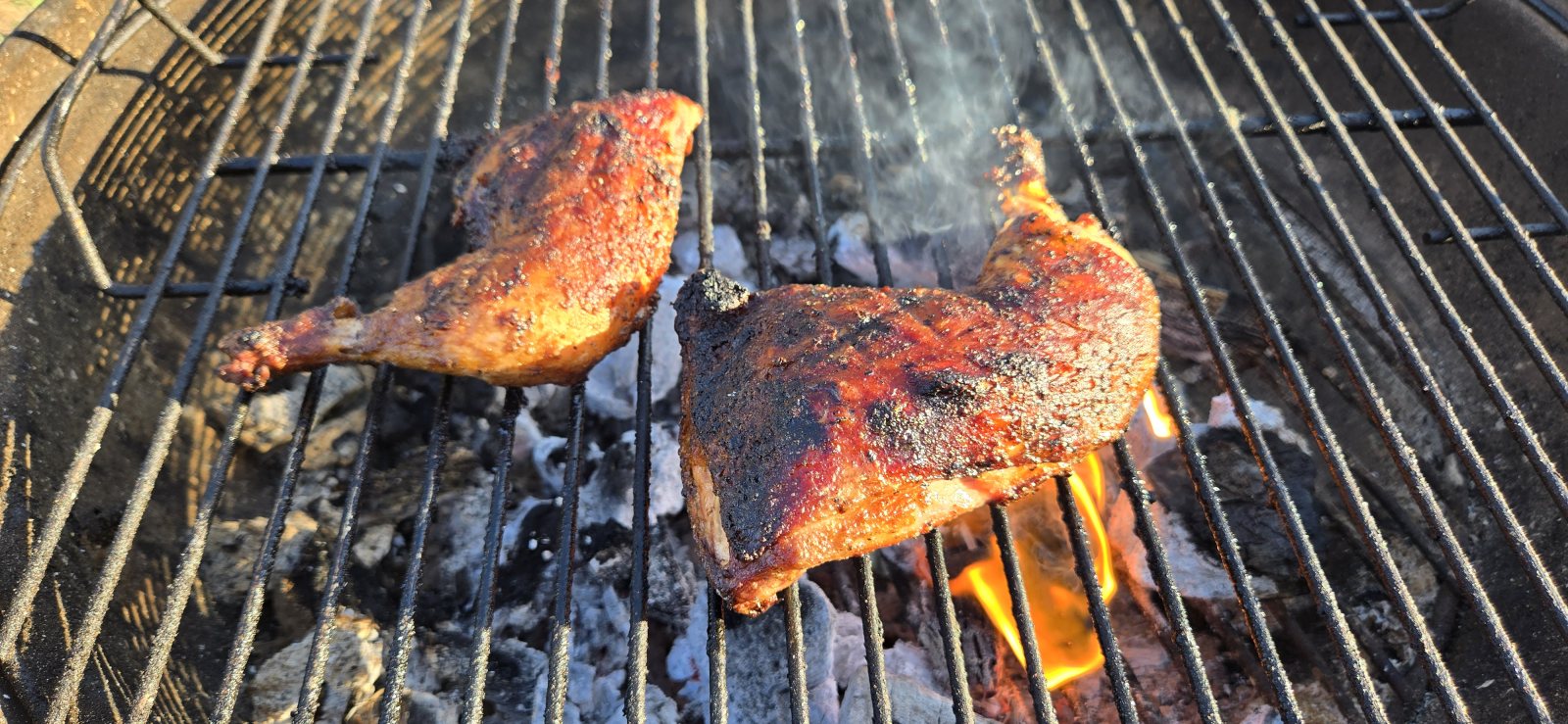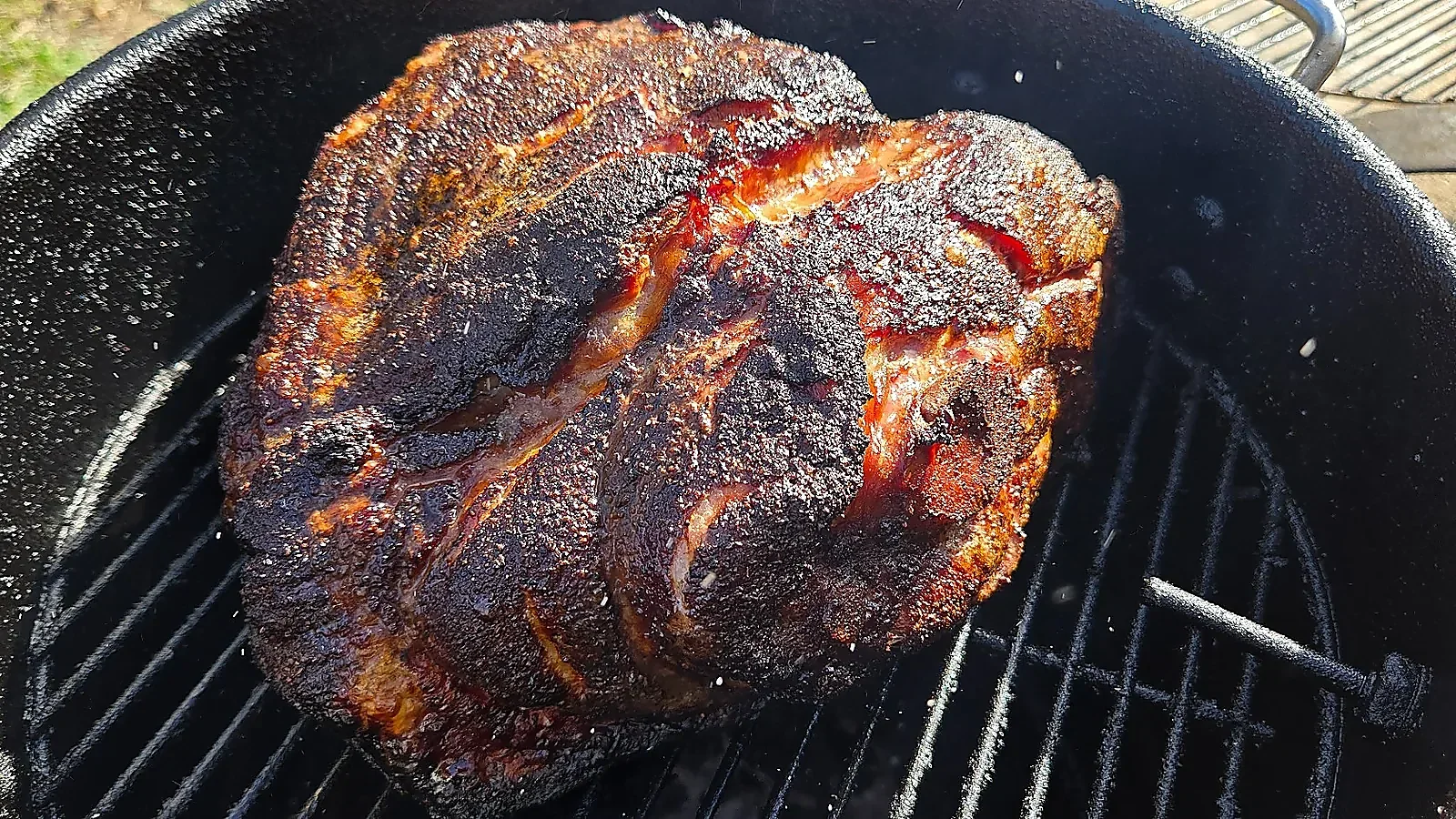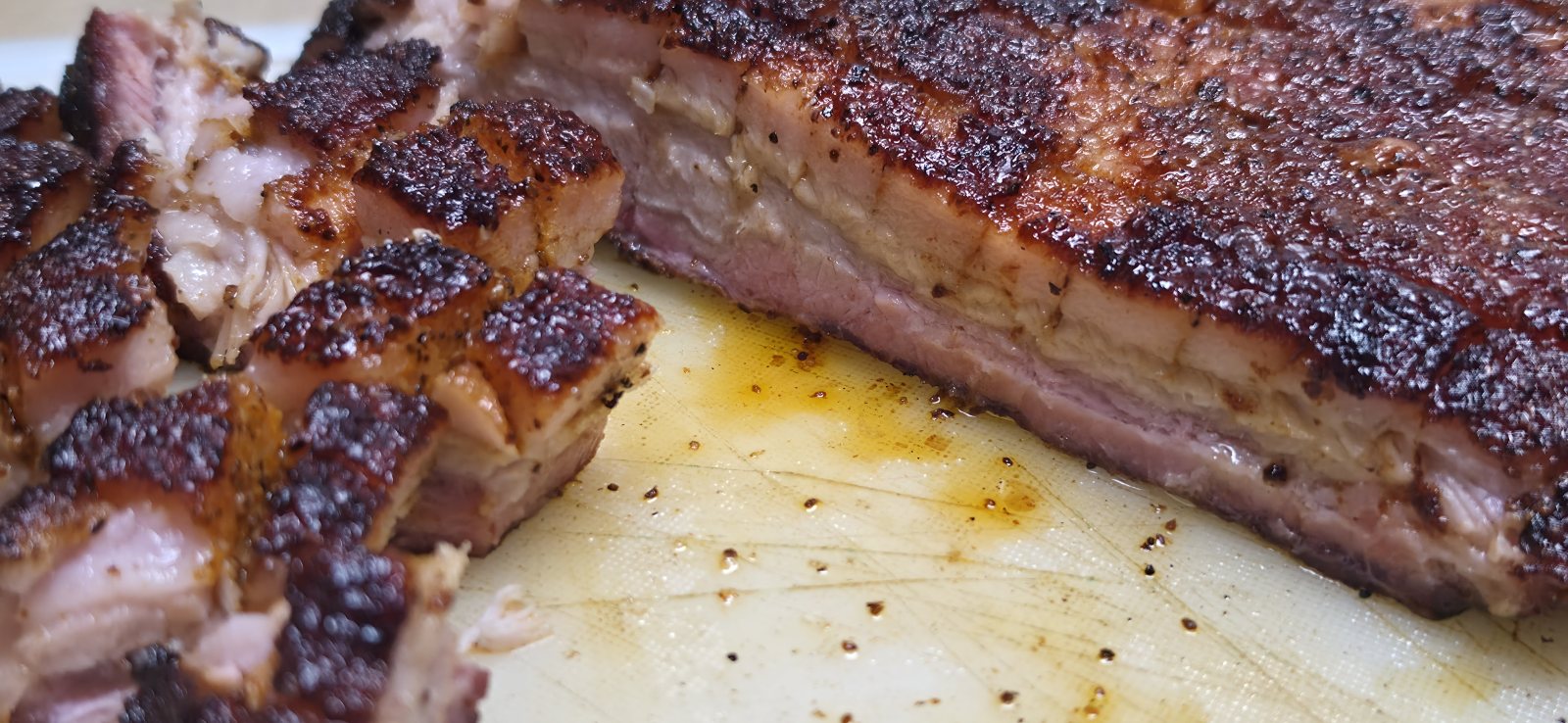
Pork belly, a scored fat cap, PyroDust BBQ Dry Rub, lump charcoal, and a two-zone kettle setup. The result is crispy bark on the outside, rendered fat through the middle, and rich, smoky pork belly slices with a little heat.
This is not a low-and-slow brisket-style cook. This is closer to a hot charcoal roast with a controlled direct-heat finish.
Ingredients
Main
- 1 pork belly, about 4 to 5 lb
- PyroDust BBQ Dry Rub of your choice
Fire
- Lump charcoal
- 2 to 3 small wood chunks, such as hickory, maple, or apple
Equipment
- Charcoal kettle grill
- Charcoal chimney or starter
- Long tongs
- Instant-read thermometer
- Cutting board
- Sharp knife
Prep
1. Score the fat cap
Place the pork belly fat-side up. Using a sharp knife, score the fat cap in a crosshatch pattern.
Cut through the fat, but do not cut deep into the meat. The goal is to open up the fat so it renders better and gives the rub more surface area to grab onto.
2. Season heavily
Coat the pork belly with PyroDust BBQ Dry Rub of your choice.
Get seasoning into the score marks, across the top, around the sides, and on the meat side. Pork belly can handle a bold coat because of the fat content.
Let it sit while the charcoal comes up to temperature. For better flavor, season it 30 to 60 minutes ahead of the cook.
Grill Setup
Set up your kettle for two-zone cooking.
Push the hot coals to one side of the grill and leave the other side open for indirect cooking. Add 2 to 3 small wood chunks to the charcoal.
Target cooking temperature: 275°F to 325°F
You want steady heat, but not a raging fire. Pork belly has enough fat to handle heat, but too much direct flame will burn the rub before the inside renders.
Cook
1. Start indirect
Place the pork belly on the indirect side of the grill, fat-side up.
Close the lid and position the vent so the smoke pulls across the meat before exiting.
Cook until the bark darkens and the fat begins to render. This will usually take about 1.5 to 2.5 hours, depending on grill temperature and pork belly thickness.
2. Rotate as needed
Check the pork belly every 30 to 45 minutes.
Rotate it if one side is getting too dark. If the bottom is cooking too fast, move it farther away from the coals.
3. Build the bark
Continue cooking until the exterior is deep mahogany with some dark, crispy edges.
A little char is good. A fully black, bitter crust is not. Pork belly can handle some aggressive edge char, but you still want to manage flare-ups.
4. Finish to tenderness
Cook until the internal temperature reaches about 195°F to 205°F in the thickest part.
More important than the number: the probe should slide in with little resistance.
For pork belly, undercooked fat will feel chewy. Properly rendered pork belly should feel soft, rich, and tender.
Optional Direct-Heat Finish
For extra crust, move the pork belly briefly over the hot side of the grill.
Use caution here. Pork belly fat will drip and cause flare-ups fast.
Sear for 30 to 90 seconds per side, moving constantly as needed. Do not walk away.
Rest
Remove the pork belly from the grill and rest for 15 to 20 minutes.
This lets the juices settle and makes slicing cleaner.
Slice and Serve
Slice into thick strips or cubes.
For a platter, serve as smoky pork belly slices.
For tacos, cube it and crisp the pieces in a hot skillet.
For burnt-end style bites, cube it, sauce lightly, and return to the grill for another 15 to 25 minutes.
PyroDust BBQ University Notes
The scoring step matters. It helps the rub get down into the fat and gives the finished pork belly that crispy, rendered texture.
The biggest risk is flare-up management. Pork belly carries a lot of fat, and once it starts rendering, direct heat can turn into a grease fire quickly. Keep most of the cook indirect, then use direct heat only as a controlled finishing step.
For this style of cook, PyroDust BBQ Dry Rub - Hot works well because the fat balances the heat. The bark gets dark, smoky, and spicy without needing sauce.
Keep learning