How an American plant transformed the flavors of the world's cooking traditions
Across the world, chile peppers have become so closely associated with regional cooking that it is difficult to imagine many traditional dishes without them. Chinese lamb skewers are frequently seasoned with cumin and chile, Korean cuisine makes extensive use of red pepper flakes, and African piri-piri chicken relies on the distinctive heat of small, pungent peppers. In Europe, paprika has become an essential seasoning in numerous regional dishes, while American barbecue cooks routinely reach for cayenne and paprika when preparing dry rubs. These foods have very different histories, yet they share an ingredient with a common geographic origin.
Every chile pepper belongs to the genus Capsicum, a group of plants native to the Americas. There is no secure evidence that chile peppers formed part of established food traditions in Europe, Africa, or Asia before the transatlantic exchanges that followed European contact with the Americas. Their subsequent introduction altered the way countless dishes were seasoned, but it did not erase the older culinary practices into which they were incorporated. Grilling, smoking, fermenting, and preparing elaborate spice mixtures had long histories in many of these regions before the first chile seeds arrived.
Understanding how this American plant became part of the world's food traditions requires more than tracing a few trade routes. The history involves Indigenous agriculture, European colonial expansion, maritime commerce, migration, and local experimentation. It also reveals how readily an introduced ingredient can become so thoroughly integrated into a cuisine that its foreign origins are largely forgotten.
An American Plant with Thousands of Years of History
The history of the chile pepper begins long before Christopher Columbus reached the Caribbean. Indigenous peoples throughout the Americas had been collecting, cultivating, and using peppers for thousands of years, selecting plants for characteristics such as fruit size, color, flavor, and pungency. Their agricultural knowledge eventually produced an extraordinary diversity of varieties, ranging from small, intensely hot peppers to large, mild fruits valued primarily for their sweetness or culinary versatility.
Five species of Capsicum were domesticated in the Americas: Capsicum annuum, Capsicum frutescens, Capsicum chinense, Capsicum baccatum, and Capsicum pubescens. Among them, C. annuum became especially important to global agriculture. It includes familiar peppers such as jalapeños and poblanos, along with many of the varieties used to produce paprika and cayenne powder. Other domesticated species contributed additional forms, flavors, and levels of pungency to the expanding international pepper trade. [1, 2]
The precise history of pepper domestication remains an active subject of archaeological and botanical research. A 2024 study published in Proceedings of the National Academy of Sciences combined archaeological evidence, seed morphology, and ecological modeling to investigate the early development of domesticated C. annuum in Mexico. Rather than supporting a single, clearly defined domestication center, the researchers proposed a prolonged process involving at least two geographically distinct regions. Their findings emphasize the complexity of human interaction with wild and cultivated pepper populations and caution against reducing that history to one location or event. [1]
By the end of the fifteenth century, chile peppers were established ingredients in Indigenous American food cultures. They were cultivated, traded, and consumed in numerous forms, and their importance extended beyond simply making food hot. The English word chile ultimately derives from the Nahuatl chīlli, while the Spanish word ají, still used in parts of Latin America, has its origins in the Indigenous languages of the Caribbean. A 2022 study published in the scholarly journal RIVAR specifically identifies the Taíno forms haxí and axí as the source of ají. These names preserve evidence of the people who knew and used the plant long before it entered European botanical literature. [3, 15]
The first surviving European descriptions help establish how quickly the pepper attracted attention. In the account of Columbus's first voyage, an entry dated January 15, 1493, describes the Indigenous people of Hispaniola using ají extensively as a seasoning. Columbus recognized its culinary importance and considered its potential commercial value, comparing it with the valuable pepper already familiar to European traders. The surviving account must be treated carefully because the original journal is lost; historians rely on a later summary and extracts preserved by Bartolomé de las Casas. Nevertheless, it provides important early evidence of European contact with an ingredient already well established in Caribbean food culture. [4, 5]
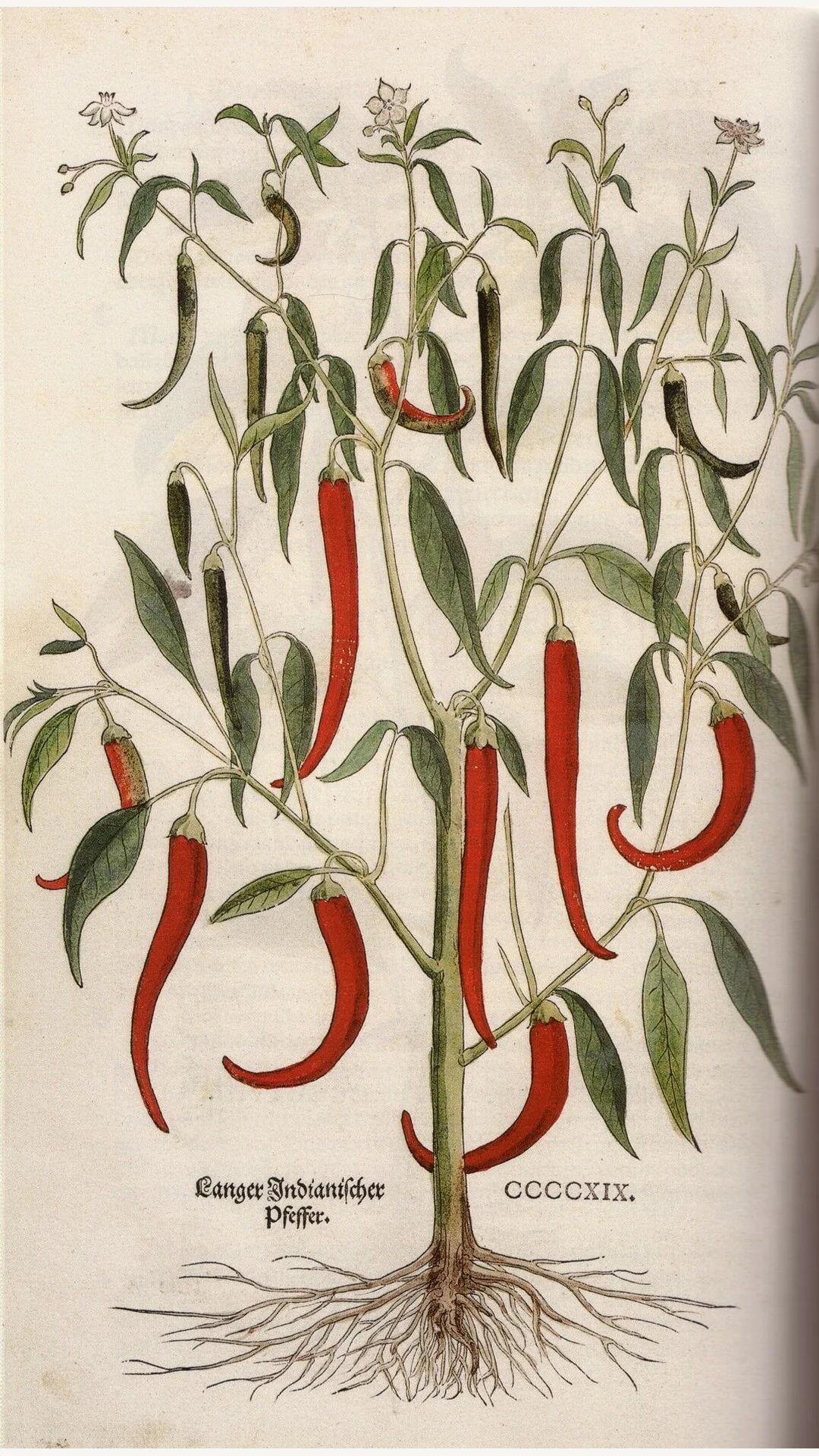
The comparison with black pepper was commercially understandable, even though the plants are unrelated. Black pepper comes from Piper nigrum, a vine native to South Asia whose pungency comes primarily from piperine. Chile peppers belong to the nightshade family, and their characteristic burning sensation comes from compounds known as capsaicinoids. Europeans applied a familiar spice name to a newly encountered American plant, creating a linguistic association that continues to cause confusion. What mattered to traders was that the unfamiliar fruit offered another source of pungency, potentially one that could be cultivated far beyond its original growing regions.
From the Americas to the World's Trade Routes
The expansion of European maritime empires during the sixteenth century created new opportunities for American crops to move between continents. Spanish ships connected American colonies with Europe and, eventually, the Philippines, while Portuguese commercial networks linked Brazil, Atlantic Africa, the Indian Ocean, and trading centers throughout Asia. These routes carried far more than commercial merchandise. Plants, seeds, animals, agricultural knowledge, and food practices accompanied merchants, sailors, settlers, enslaved people, and migrants.
Chile peppers possessed several characteristics that encouraged their spread. Their seeds could be transported in small quantities, and the plants could be cultivated successfully in many tropical and temperate regions. Once established, peppers could be reproduced locally rather than imported continuously from their original growing areas. Their fruits could also be dried and stored, making them useful as both agricultural products and transportable seasonings. These advantages allowed peppers to move beyond major ports and eventually become part of local farming and food preparation.
Modern genetic research has added another dimension to this history. In 2021, an international team led by Pasquale Tripodi analyzed 10,038 pepper accessions preserved in collections around the world. Published in Proceedings of the National Academy of Sciences, the study identified genetic relationships consistent with extensive historical exchange and the development of new centers of pepper diversity in Africa and Asia. Its findings support the importance of multiple routes of expansion rather than one simple journey from the Americas to the rest of the world. [6]
Genetic relationships, however, cannot establish the date on which a particular ship carried pepper seeds into a particular port. Nor can they explain precisely when a community began using peppers in its cooking. Those questions depend on surviving historical evidence, including agricultural records, botanical descriptions, travelers' accounts, cookbooks, and local writings. The limitations of these sources are especially apparent when examining the arrival of chile peppers in India and China, where commonly repeated historical timelines have proved less secure than they initially appear.
India: A New Ingredient in an Established Spice Culture
India possessed extensive and varied spice traditions long before American chile peppers entered its food culture. Black pepper, long pepper, ginger, mustard, and numerous other ingredients supplied pungency and aroma to dishes throughout the subcontinent. Indian cooks understood how to combine these ingredients with fats, acids, and aromatic seasonings, and they had developed established traditions of roasting, grilling, and preparing meat with complex spice mixtures. The arrival of chile peppers therefore did not introduce spicy cooking to India. Instead, it provided a new ingredient that could be incorporated into existing culinary practices.
Portuguese activity along India's western coast, particularly around Goa, is frequently credited with introducing American chile peppers during the sixteenth century. The commercial connections certainly made such an introduction possible, but the precise date is not established by surviving contemporary evidence. In a 2025 examination of early pepper history, food historian Andrew Dalby identified several widely repeated claims that had originated as speculation and gradually been presented as established fact. Accounts placing chile peppers in India within a few decades of the Portuguese arrival often lack the primary documentation necessary to support those dates. [7]
One example illustrates the difficulty. A historical account by Sebastián Manrique was translated as describing pickled green chile peppers at an Indian meal. Subsequent examination of the original terminology showed that the passage referred instead to green peppercorns, the unripe fruit of Piper nigrum. Another frequently cited reference comes from a devotional poem attributed to the sixteenth-century Indian poet Purandaradasa, but the text was collected and compiled much later, making it unreliable as contemporary evidence of chile consumption. [7]
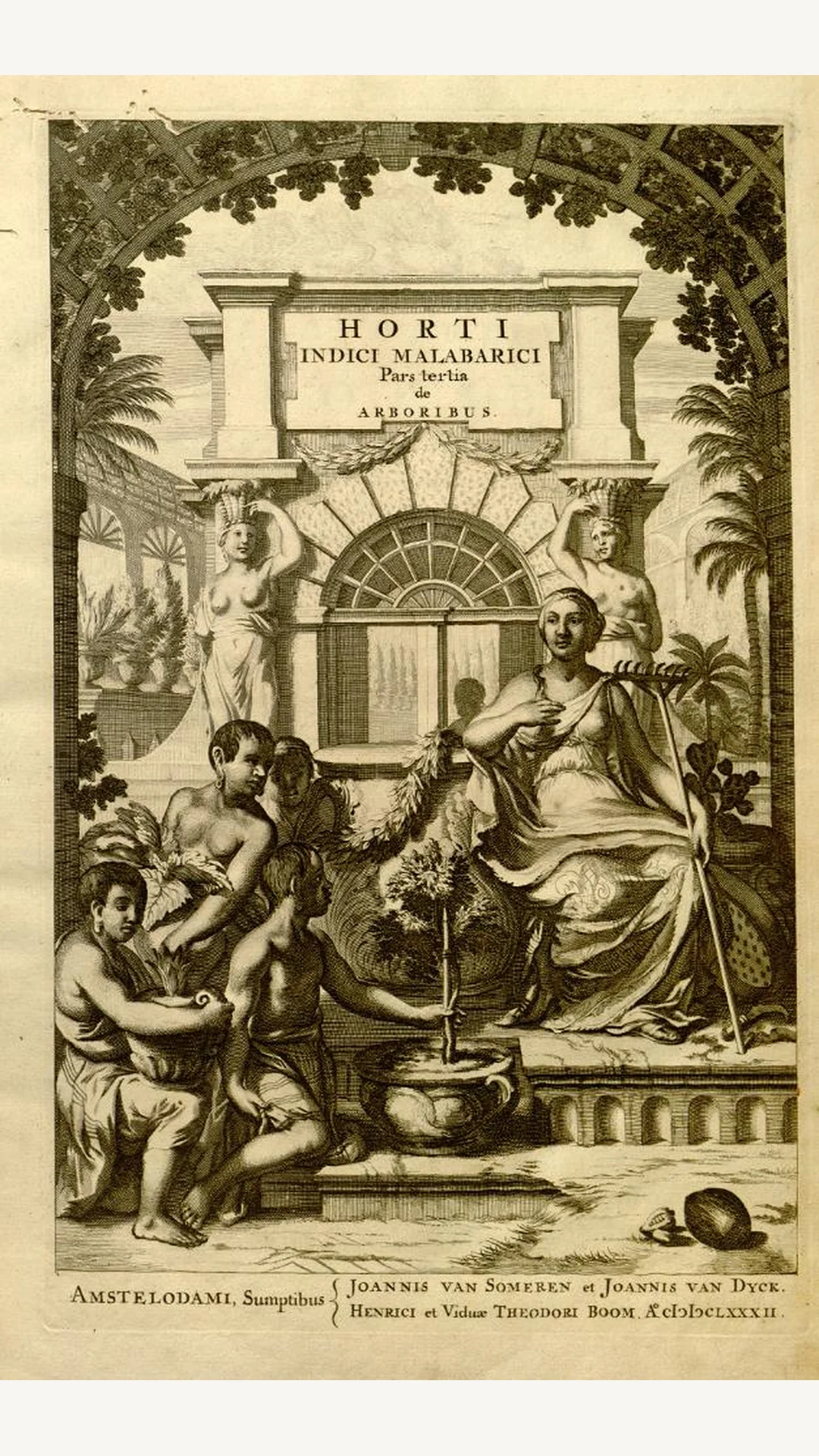
Dalby identifies a firmer early record in the second volume of Hendrik van Reede's Hortus Malabaricus, published in 1679, which contains a botanical description and illustration of a Capsicum plant. Even this evidence has limitations. It documents the plant in a work on Malabar botany, but does not establish how widely it was cultivated or whether it was used in Indian kitchens. References to chile peppers become more securely documented in subsequent culinary literature, particularly from the eighteenth century onward. [7]
The distinction between introduction and adoption is important. A crop may be present in a garden for decades before becoming a common food ingredient, and its popularity can vary greatly between regions. India already had access to black pepper and numerous pungent spices, so chile peppers did not necessarily offer the same economic or culinary advantages that they presented elsewhere. Nevertheless, Indian farmers and cooks eventually incorporated them into an extraordinary range of preparations, including fresh and dried seasonings, pickles, sauces, and spice mixtures.
Today, chile peppers are deeply associated with many Indian dishes, including preparations served from charcoal grills and tandoor ovens. Their presence demonstrates the ability of an introduced ingredient to become part of an established culinary tradition without replacing its underlying techniques. The cooking methods had their own histories, while the chile pepper gradually contributed new flavors and possibilities.
China: Ancient Grilling Traditions Meet an American Pepper
China presents a particularly revealing example of the difference between the age of a cooking method and the age of its ingredients. Modern Chinese grilled meat is frequently associated with cumin, chile flakes, and charcoal, especially in skewered preparations influenced by Uyghur and other Central Asian food traditions. Although these seasonings are now familiar, the practice of cooking meat over fire is far older than the arrival of American peppers.
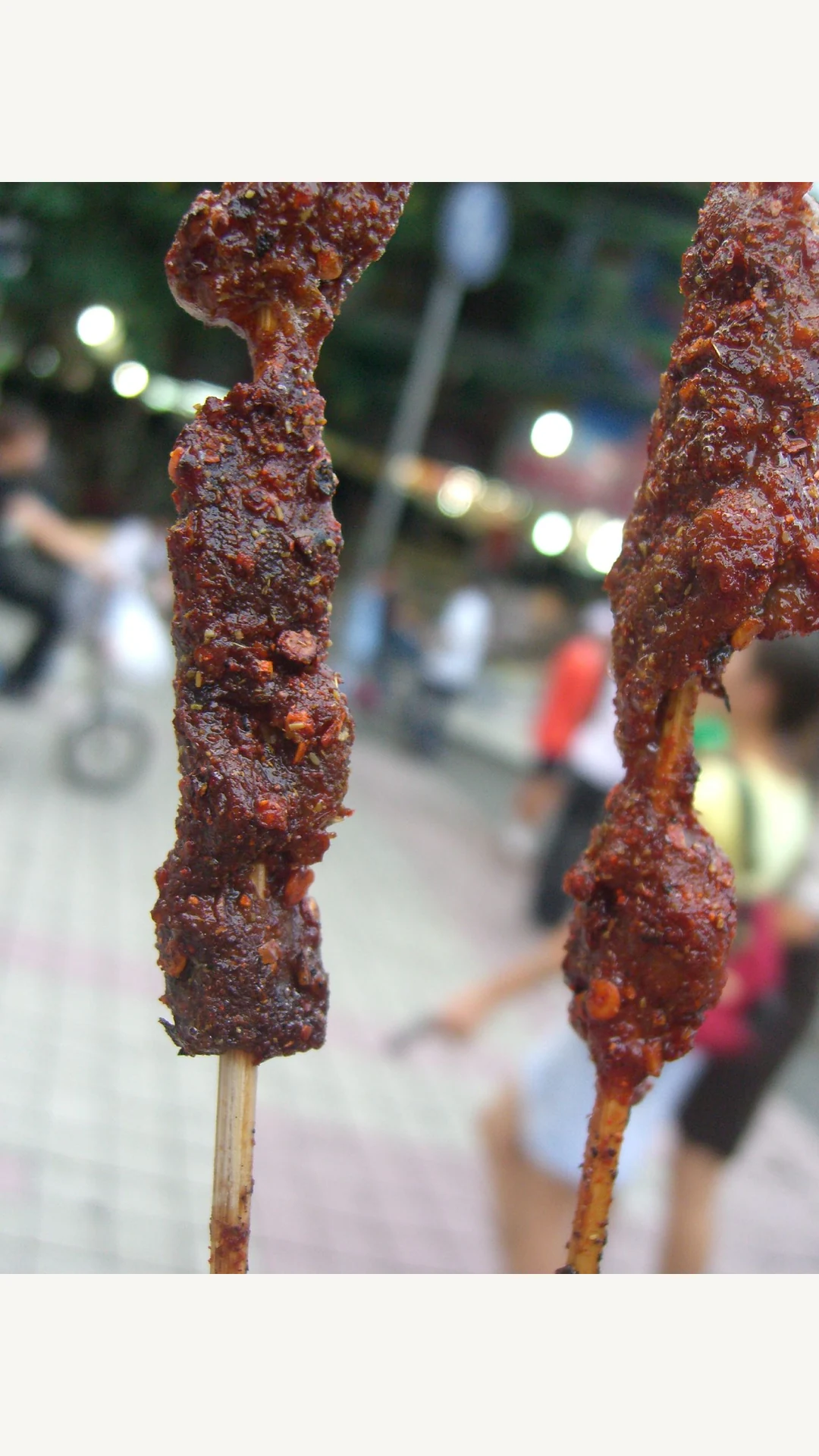
In a study published in 2025 in the Journal of the Royal Asiatic Society, researcher Olivia Milburn examined archaeological and literary evidence for ancient Chinese skewer cooking. The surviving material includes depictions of grilled meat, cooking equipment, and early recipes describing different methods of preparing pieces of meat. Particularly significant is a cookbook recovered from the tomb of Wu Yang, a Han dynasty nobleman who died in 162 BCE. The evidence demonstrates that sophisticated methods of preparing and cooking small pieces of meat existed in China more than sixteen centuries before European contact with the Americas. [8]
Milburn's research also challenges the assumption that similar cooking techniques found in different cultures must have originated from a single source. The existence of ancient Chinese skewer cooking does not establish a direct line of descent to every modern regional skewer tradition, nor does it eliminate the possibility of later exchanges with Central Asia. It does, however, demonstrate why historians must distinguish between the development of a cooking technique and the subsequent introduction of new seasonings.
Establishing when chile peppers first reached China has proved more complicated. Many historical accounts identify a description in Gao Lian's Zunsheng Bajian, dated 1591, as the earliest surviving Chinese reference. However, historian Cheng Jie of Nanjing Normal University published a detailed examination of different editions of that work in 2020 and concluded that the pepper passage was absent from the original edition. According to his research, the description appeared in a later revision, while Wang Xiangjin's Qunfangpu, completed around 1621 and printed in 1629, provides a stronger candidate for the earliest reliable surviving reference. [9]
Cheng's analysis also challenges the conventional account of how chile peppers first spread through China, arguing for an important early role for Shandong and connections with the Korean Peninsula. Andrew Dalby, writing in 2025, still treats Gao's 1591 work as evidence for the early Chinese history of chile peppers, while Cheng argues that the relevant description entered a later edition. Their different readings should not be mistaken for a settled consensus. The disagreement illustrates a broader difficulty in agricultural history: the earliest surviving written description is not necessarily the first appearance of the plant, and regional records can preserve an incomplete picture of how a new crop spread. [7, 9]
As chile peppers became more widely cultivated, Chinese cooks incorporated them into established regional food traditions. In Sichuan, they eventually became closely associated with Sichuan pepper, a native ingredient from plants in the genus Zanthoxylum. Sichuan pepper produces a distinctive numbing sensation, while chile peppers provide a different form of pungency. Their combination became central to the málà flavor characteristic of many modern Sichuan dishes.
Chinese skewer cookery reveals a different interaction between old and new ingredients. Cumin, long used across western and Central Asia, became an important seasoning in numerous regional meat preparations. American chile peppers eventually joined these combinations, contributing additional heat and flavor. The exact chronology of their adoption into individual Uyghur and Chinese skewer traditions remains insufficiently documented to assign a definitive date. What the evidence establishes is that the cooking methods, the principal spices, and the later chile seasonings represent overlapping histories rather than one ancient, unchanged recipe.
Korea: How an Introduced Pepper Changed a Traditional Food
Korean cuisine provides another example of an imported ingredient becoming closely associated with a much older culinary tradition. Kimchi and other forms of fermented vegetables existed before chile peppers reached the Korean Peninsula. Earlier preparations relied on salting, fermentation, and available seasonings to preserve food and develop flavor, but they did not necessarily possess the red appearance familiar in many modern kimchi preparations.
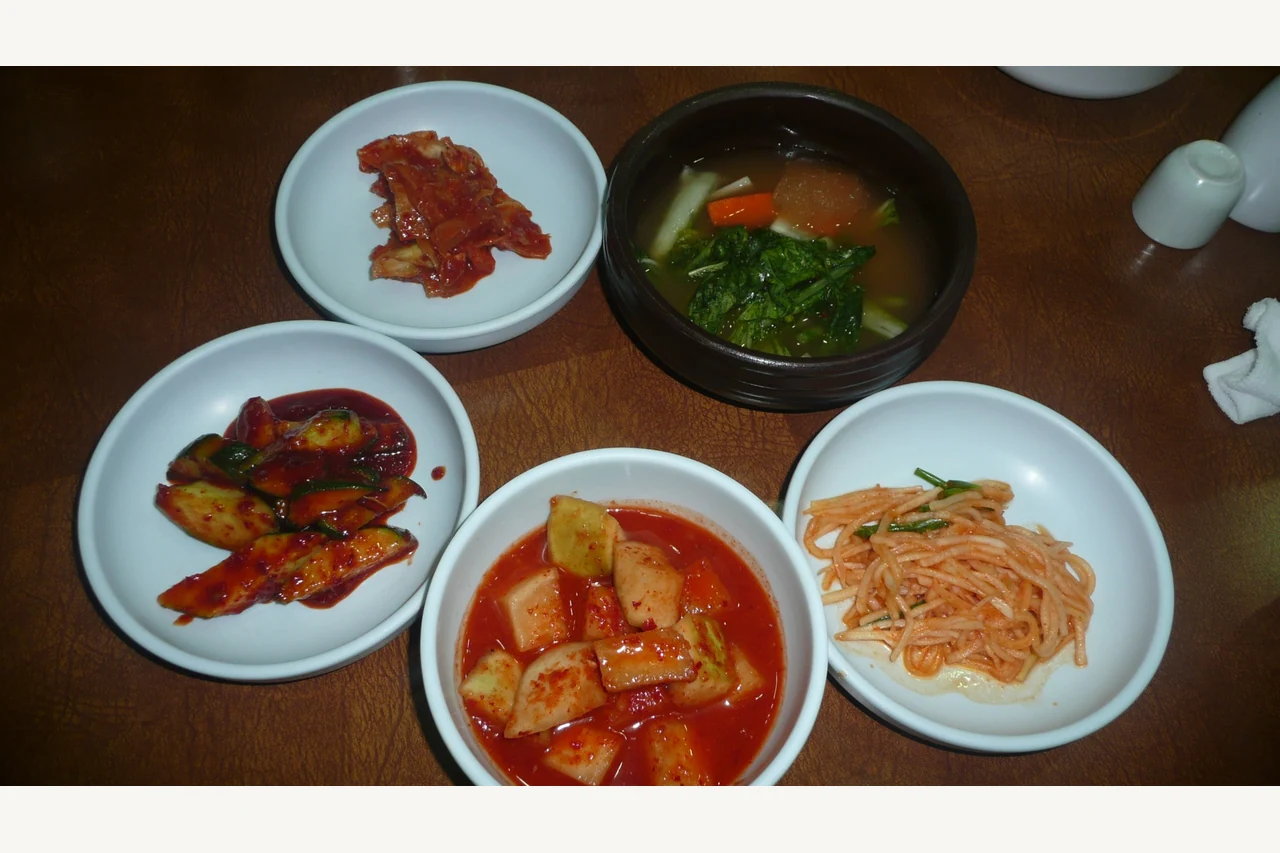
A bibliographic study published in 2018 by Seo-Yeon Yoon examined historical Korean writings concerning fermented vegetables. The research identified a reference to red pepper in Jibongyuseol, dated 1613, a description of pepper cultivation in Sallimgyeongje from 1715, and a recipe combining chile powder with fermented vegetable ingredients in Soomunsaseol, dated 1740. These records document stages in the pepper's appearance and adoption, although they cannot establish the exact date when the first Korean household began using it. [10]
The incorporation of chile peppers also influenced Korean fermented soybean seasonings. Modern gochujang combines red pepper powder with ingredients such as fermented soybean products, grains, and salt, producing a paste whose flavor depends on more than the heat of the pepper alone. A February 2025 article published by Korea's government-supported cultural magazine explains that earlier preparations may have shared the name gochujang before the introduction of American peppers, but likely differed considerably from the modern condiment. Historical agricultural and culinary writings from the seventeenth and eighteenth centuries document the increasing use of peppers and the development of chile-containing preparations. The exact chronology of gochujang's evolution remains a subject of scholarly discussion, making it inappropriate to assign one definitive invention date. [16]
Today, gochugaru and gochujang are widely associated with Korean food, but their familiar modern applications developed within an older culinary system. Their significance extends beyond fermented vegetables, since chile-based pastes and seasonings also became ingredients in meat preparations and grilled dishes. As in India and China, the introduced crop did not create the cuisine; it became part of an evolving body of culinary knowledge.
Africa: The Development and International Spread of Piri-Piri
The movement of chile peppers into Africa created some of the clearest connections between global agricultural exchange and modern live-fire cooking. Portuguese colonial and commercial activity linked South America with African territories, including Mozambique and Angola, while established Indian Ocean trading networks connected eastern Africa with merchants and communities from Arabia, Persia, and India. These overlapping networks helped bring American crops into regions that already possessed diverse food traditions.
Piri-piri provides an especially interesting example. The small, hot peppers associated with the tradition are generally identified with Capsicum frutescens, an American-origin species that became established in African agriculture. The peppers developed several regional names, including piri-piri, peri-peri, and pili-pili, reflecting the languages and communities through which they circulated. Their adoption occurred within food cultures already shaped by African agricultural practices, regional trade, and the movement of people across the Indian Ocean. [11]
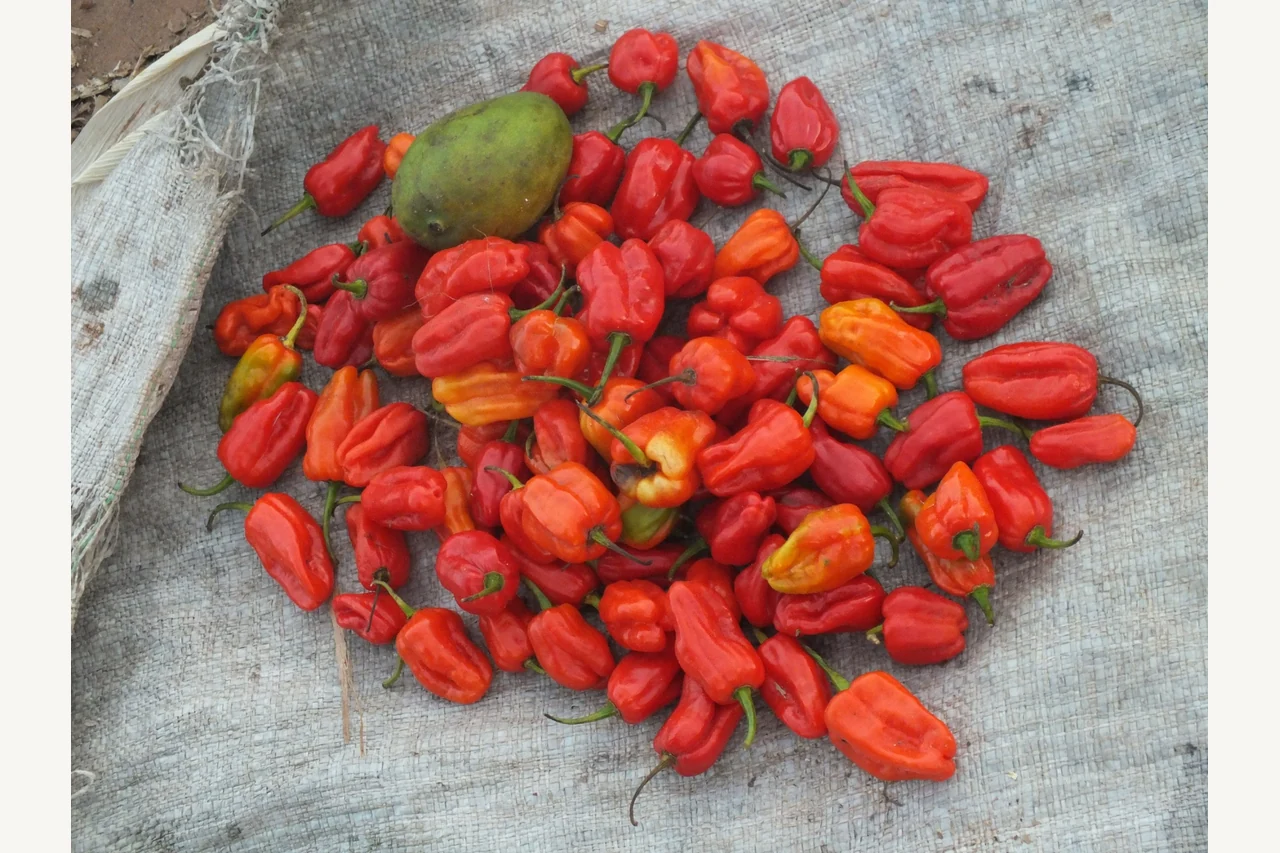
Over time, cooks combined chile peppers with other ingredients to develop seasonings and sauces used with meat, particularly chicken. Modern piri-piri preparations often include garlic, citrus, vinegar, oil, and additional spices, although recipes vary considerably between regions and households. The cooking methods also differ, but charcoal grilling has become strongly associated with the preparation. It would be inaccurate to identify one surviving recipe as the definitive original form of piri-piri chicken without stronger historical evidence.
The international spread of the dish adds another chapter to the pepper's journey. Piri-piri preparations became associated with Portuguese food culture and later gained wider recognition through migration and commercial restaurants. In 1987, a Johannesburg restaurant became the foundation of Nando's, which subsequently expanded across several continents. Historian Trishula Patel, writing for the American Historical Association in 2023, examined how this food tradition reflects interactions between African cooking, Portuguese colonial history, and the wider Indian Ocean world. [11]
Piri-piri illustrates a process that occurred repeatedly as chile peppers traveled. A plant introduced from another continent was cultivated and incorporated into regional cooking, eventually becoming an ingredient closely associated with the place that adopted it. The resulting food tradition then traveled internationally under its new regional identity.
Jamaica: A Different Story of Cultural Exchange
The Caribbean offers an important contrast to the pepper's introduction into Africa and Asia. Chile peppers were already present in the region before European colonization, as Columbus's account makes clear. Their role in Jamaican cooking therefore cannot be explained simply as a European introduction. Instead, the history involves the interaction of Indigenous Caribbean food knowledge with African culinary practices under the conditions created by European conquest and slavery.
Jamaican jerk is closely associated with this history. Cultural scholar Carolyn Cooper has described jerk as an enduring expression of the interaction between African and Taíno traditions, particularly through the experiences of Maroon communities that established settlements beyond the control of colonial authorities. Historical accounts and surviving traditions connect jerk with the seasoning, preservation, and cooking of meat using local ingredients, including hot peppers and pimento, the Jamaican name for allspice. [12]
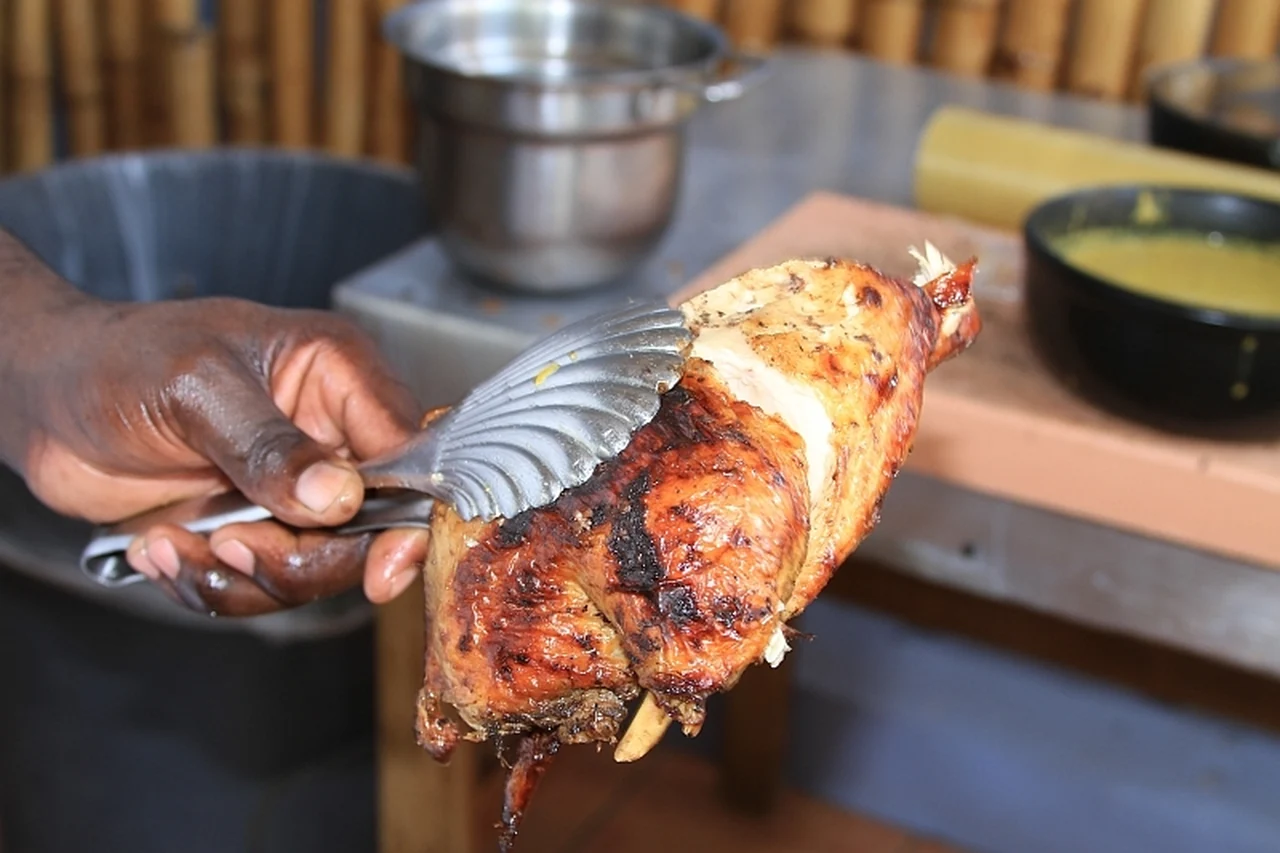
Allspice provides another example of how regional terminology can create confusion. Despite the shared use of the word pimento, Jamaican allspice comes from Pimenta dioica, a completely different plant from the peppers used to produce Spanish paprika. Traditional jerk cooking also involves more than a seasoning mixture. The selection of fuel, the use of wood and leaves, and the method of applying heat are important parts of the preparation.
The history of jerk should not be reduced to the story of chile peppers alone. It developed through the knowledge and experiences of communities whose culinary practices were shaped by Indigenous traditions, African heritage, and resistance to enslavement. Nevertheless, it demonstrates how an American pepper could contribute to a distinctive form of barbecue without following the same introduction route seen in Africa or Asia.
From European Paprika to the American Barbecue Pit
As chile peppers became established in Europe, growers selected varieties that suited local climates and culinary preferences. Some were valued for intense heat, while others were cultivated for sweetness, color, or their ability to produce a flavorful powder when dried and ground. These developments helped establish paprika as a characteristic seasoning in several European food cultures, including those of Spain and Hungary.
The Spanish region of La Vera provides a particularly useful example of how local processing methods created a distinctive ingredient from an introduced crop. Under the official Protected Designation of Origin specification for Pimentón de la Vera, designated pepper varieties must be harvested ripe and dried using oak or holm oak wood according to the region's traditional method before being ground. The specification explicitly identifies the smoky flavor and aroma produced by this drying process as characteristics of the finished paprika. Unlike paprika produced without smoke-drying, this preparation acquires part of its flavor before it ever reaches the cook's kitchen. These production requirements are documented in the government's protected-product specification rather than relying on commercial descriptions of the seasoning. [13]
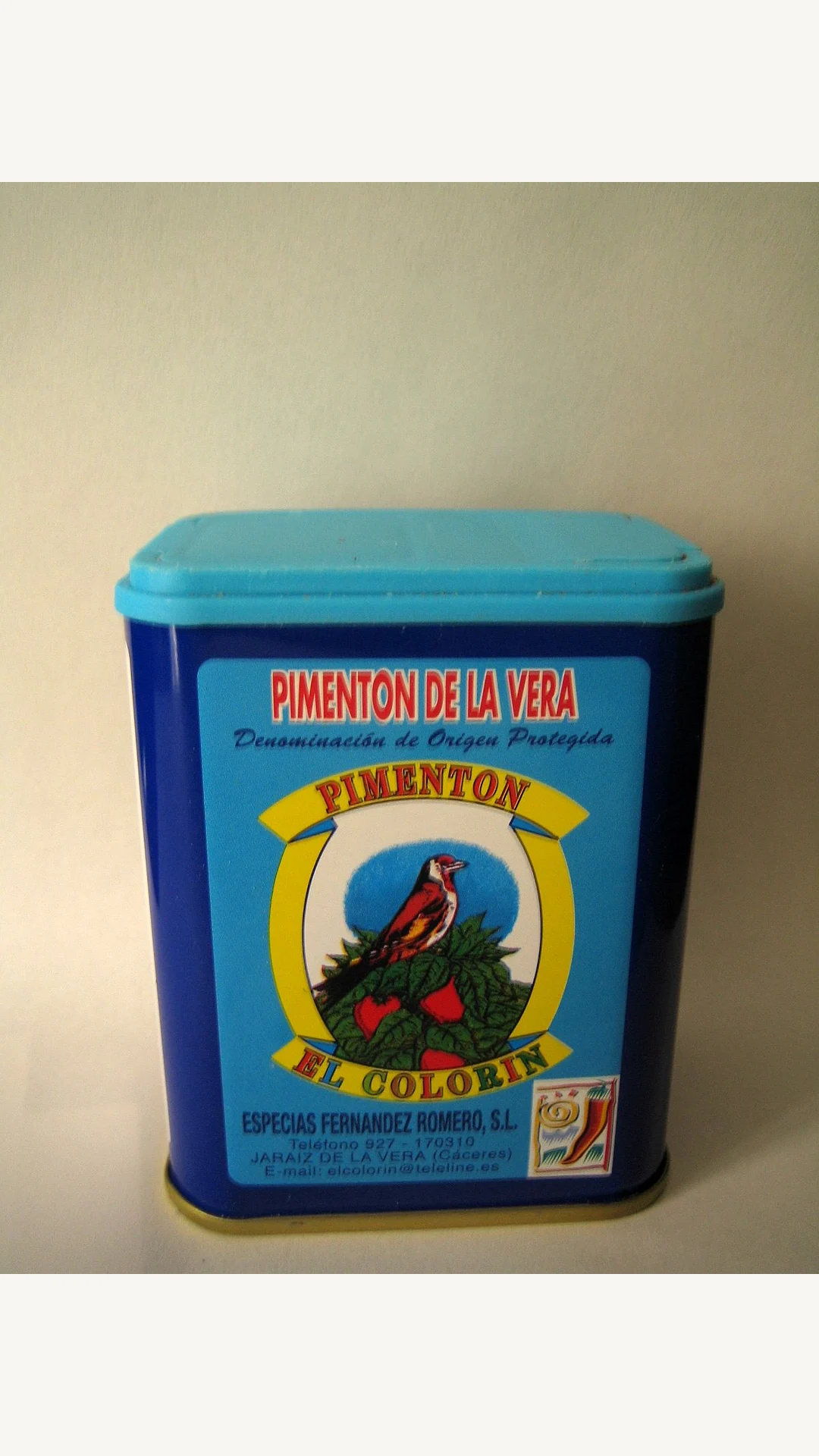
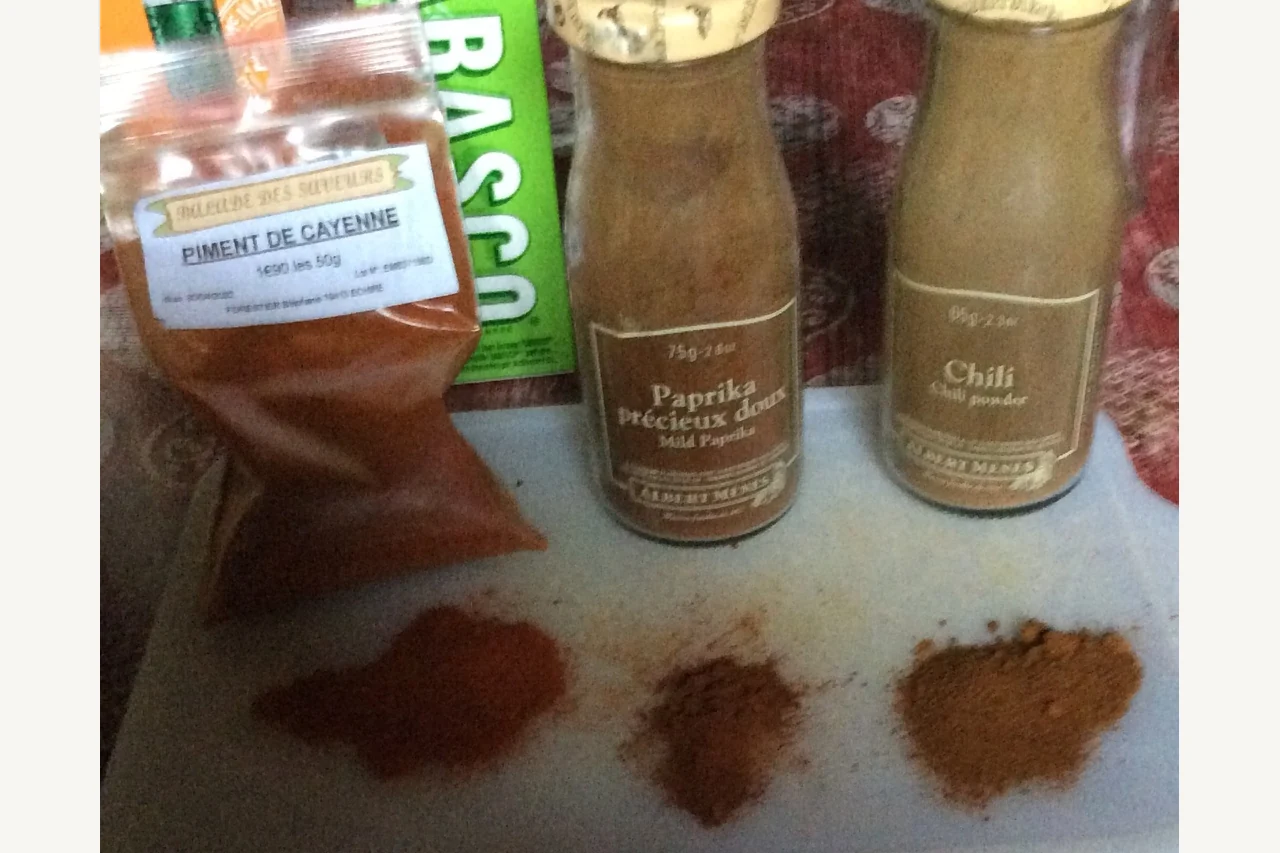
The distinction is relevant to modern barbecue, where paprika and cayenne frequently appear in dry seasoning blends. These ingredients contribute different characteristics depending on the pepper variety and processing method. Paprika may provide color, sweetness, and a relatively mild pepper flavor, while cayenne is generally used to contribute more noticeable heat. Smoked paprika introduces another flavor element derived from the pepper's processing rather than the smoke generated during cooking.
Historical American barbecue, however, was not always seasoned in the manner familiar to modern competition and backyard cooks. A revealing account appears in Martha McCulloch-Williams's 1913 book Dishes & Beverages of the Old South, which describes barbecue prepared over a long trench of coals. According to her account, whole animals were split, placed on supports above the fire, and cooked for approximately twelve hours while being basted with saltwater. The meat was turned only once, with additional coals supplied as necessary to maintain the heat. [14]
The final seasoning was especially interesting. McCulloch-Williams described a sauce called dipney, prepared with melted lard, black pepper, small hot red peppers, strong apple vinegar, salt, and a secret mixture of powdered herbs. The sauce was simmered and applied toward the end of cooking, producing a very different seasoning process from applying a modern paprika-based rub before the meat enters the smoker. Chile peppers were present, but their preparation and timing were different.
The source also requires careful interpretation. McCulloch-Williams wrote from a nostalgic perspective on plantation-era Southern life, and her description reflects the social and racial hierarchy of that world. The skilled barbecue specialist she called Daddy appears in the narrative as the person responsible for preparing the sauce, but his full name and firsthand account of the technique are not preserved. The description documents a particular remembered practice rather than establishing a universal method of Southern barbecue.
What makes the account valuable is the evidence it provides about the changing use of seasonings. In this preparation, hot peppers contributed to a vinegar-and-fat sauce applied near the end of cooking. Modern barbecue frequently incorporates powdered peppers directly into dry rubs, while other regional traditions rely on pepper pastes, marinades, or finishing sauces. These differences illustrate how the same botanical ingredient can fulfill several culinary purposes, depending on the cooking technique and the traditions of the people preparing the food.
One Ingredient, Many Culinary Histories
The worldwide spread of chile peppers demonstrates how easily the history of an ingredient can become confused with the history of the food in which it appears. Chinese cooks were preparing grilled meat long before chile peppers arrived, while Indian cooks had developed complex spice traditions centuries before the introduction of American crops. Korean fermentation, African live-fire cooking, and Caribbean meat preparation likewise possessed established histories into which chile peppers were incorporated in different ways.
The pepper's success was not simply the result of international trade. Trade created opportunities for the plant to reach new regions, but local farmers and cooks determined what happened afterward. They selected varieties, developed cultivation methods, combined peppers with familiar ingredients, and adapted them to established preparations. Over time, these decisions produced new regional identities for a plant whose American origins remained unchanged.
The process was also shaped by unequal historical circumstances. Colonial expansion and the forced movement of people contributed to the exchange of plants and culinary knowledge, often under conditions of exploitation and violence. Recognizing those circumstances is essential to understanding the history without romanticizing the mechanisms by which ingredients traveled.
For barbecue enthusiasts, perhaps the most interesting lesson is that the history of cooking with fire cannot be separated from the history of the ingredients used to season food. A traditional cooking technique may be thousands of years old, while one of its most recognizable modern seasonings arrived only a few centuries ago. Recognizing that distinction does not make the preparation any less traditional. It reveals how food traditions survive by adapting to changing circumstances, available ingredients, and the preferences of successive generations.
The chile pepper began as a cultivated ingredient of Indigenous American food cultures and eventually became part of cooking traditions across the world. Its journey connected regions that had previously developed their own methods of preparing food, but it did not produce one uniform global cuisine. Instead, it contributed to an enormous variety of preparations, each shaped by local history, ingredients, and culinary knowledge. The remarkable achievement of the chile pepper was not that it made the world's food taste the same. It was that people in so many different places found entirely different ways to make it their own.
References and Further Reading
-
Chiou, Katherine L., et al. (2024). Interdisciplinary Insights into the Cultural and Chronological Context of Chili Pepper (Capsicum annuum var. annuum L.) Domestication in Mexico. Proceedings of the National Academy of Sciences.
Read source -
University of Oxford, Department of Plant Sciences. Capsicum Species. Oxford Plants 400. Botanical overview of pepper origins and domesticated species.
Read source -
Wired Humanities Project. Nahuatl Dictionary: Chilli. Includes historical documentation from Alonso de Molina's 1571 Nahuatl-Spanish dictionary.
Read source -
Columbus, Christopher. Journal of the First Voyage, January 15, 1493, preserved through Bartolomé de las Casas. English edition edited by B. W. Ife, King's College London.
Read source -
Ife, B. W. Introduction to the Letters from America. King's College London. Discussion of the preservation and historical interpretation of Columbus's surviving journal.
Read source -
Tripodi, Pasquale, et al. (2021). Global Range Expansion History of Pepper (Capsicum spp.) Revealed by Over 10,000 Genebank Accessions. Proceedings of the National Academy of Sciences.
Read source -
Dalby, Andrew (2025). Chili Peppers: The First Stage of World Conquest. In Manuscripts, Plants, Remedies in the Mediterranean Traditions: Studies Across Disciplines for Alain Touwaide, vol. 3, pp. 387–410. De Gruyter Brill. Author-uploaded full text.
Read source -
Milburn, Olivia (2025). Cooking Meat in Ancient China: Luan 臠, Zi 胾, and the Origins of the Kebab. Journal of the Royal Asiatic Society, 35(4), 1051–1066. Cambridge University Press.
Read source -
Cheng Jie (2020). 我国辣椒起源与早期传播考:起源山东,来自朝鲜半岛. The Paper, August 11, 2020. Chinese-language examination of early Chinese chile pepper records and their disputed chronology.
Read source -
Yoon, Seo-Yeon (2018). A Study on the Bibliographies of Korean Fermented Vegetables, Kimchi Group. Journal of Studies in Bibliography, 74, 311–356.
Read source -
Patel, Trishula (2023). It's Always Time for a Cheeky Nando's: The Global Journey of an African Cuisine. Perspectives on History, American Historical Association, September 19, 2023.
Read source -
Gray, Vaughn Stafford (2020). A Brief History of Jamaican Jerk. Smithsonian Magazine, December 22, 2020.
Read source -
UK Department for Environment, Food & Rural Affairs. Pimentón de la Vera: Protected Designation of Origin Product Specification. Official government-hosted product specification describing permitted pepper varieties, oak and holm oak drying, and the characteristic smoky flavor.
Read source -
McCulloch-Williams, Martha (1913). Dishes & Beverages of the Old South. Original historical cookbook. See the barbecue and dipney descriptions in the chapter Upon Occasions. Project Gutenberg, ebook 28491.
Read source -
Quiñones Díaz, Ximena E., Diego Muñoz Concha, and Lizbeth Nuñez Carrasco (2022). El cultivo del ají (Capsicum spp.) como patrimonio cultural campesino: análisis exploratorio. RIVAR, 9(26). DOI: 10.35588/rivar.v9i26.5531. Documents Indigenous American pepper names, including the Taíno forms haxí and axí.
Read source -
Alper, Tim (2025). The Origin: Gochujang. KOREA, February 2025. Government-supported Korean cultural publication discussing the development of modern chile-containing gochujang, its ingredients, and earlier preparations that may have shared its name.
Read source
Image Credits and Licensing
Images are contemporary illustrations unless identified as historical artwork. Images have been resized and converted to WebP for web presentation, with neutral margins added where necessary to preserve their original composition. The cover image was cropped to fit the website's standard format. Credits are listed in order of appearance.
- Cover image: qubodup (2012). Original image · CC0 1.0.
- 1543 botanical illustration: Leonhart Fuchs, Albrecht Meyer and collaborators (1543). Original image · Public domain.
- Hortus Malabaricus frontispiece: Hendrik van Rheede, historical engraving (1682). Original image · Public domain.
- Uyghur lamb skewers: Alpha (avlxyz) (2007). Original image · CC BY-SA 2.0.
- Korean kimchi varieties: Dr. Bernd Gross (Bruecke-Osteuropa) (2011). Original image · CC0 1.0.
- African piri-piri peppers: Orrling (2012). Original image · CC BY-SA 3.0.
- Jamaican jerk chicken: OUTography.com (2010). Original image · CC BY 2.0.
- Pimentón de la Vera: Doalex (2010). Original image · CC BY-SA 3.0.
- Cayenne and other chile powders: Andrew Dalby (2021). Original image · CC0 1.0.
BBQ University | The Journey of Fire & Flavor
Keep learning