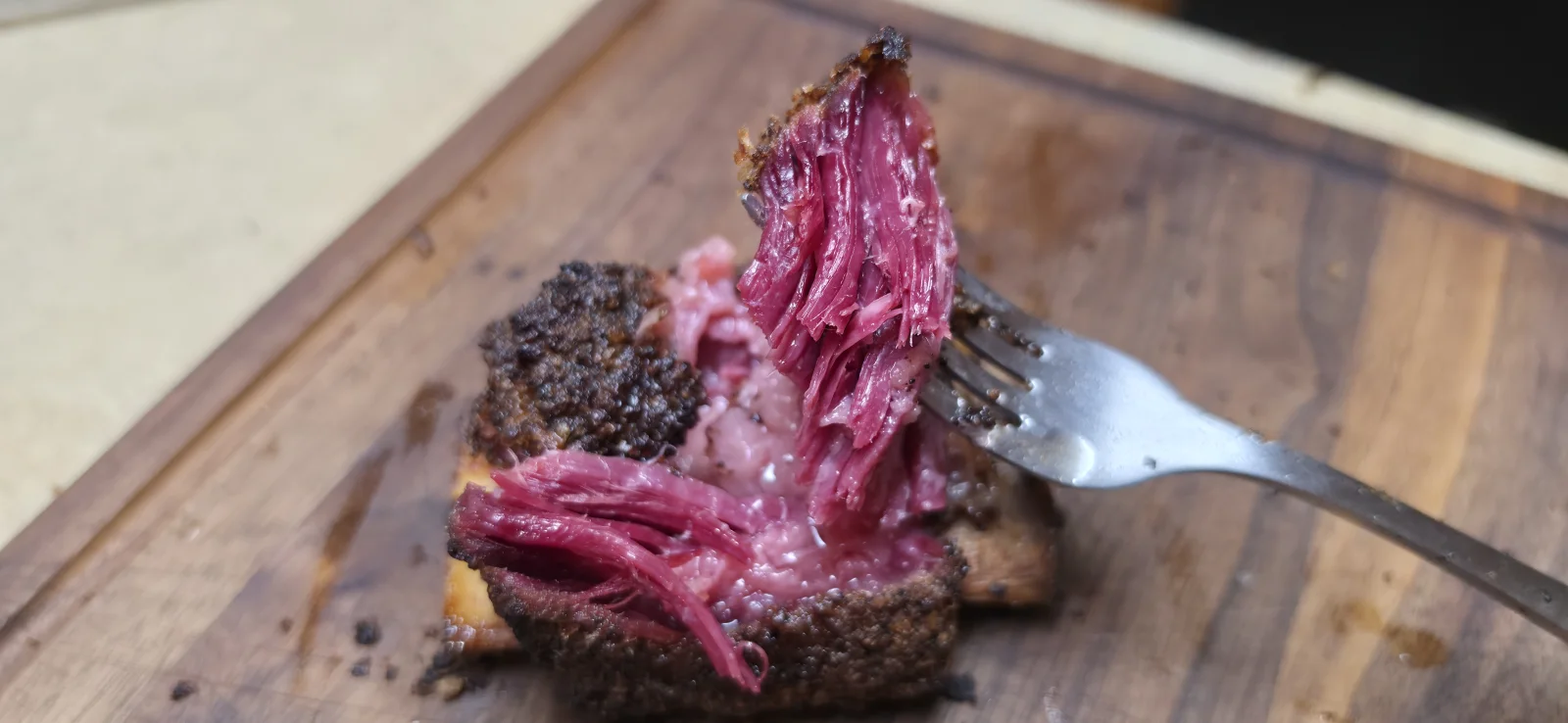
I am not sure who it was that recently mentioned making pastrami-style beef ribs, but the idea sounded amazing. Since then, I have been watching for some thick, meaty beef short ribs that looked like they could handle the process.
I finally found about seven pounds of beef ribs that looked perfect for the experiment.
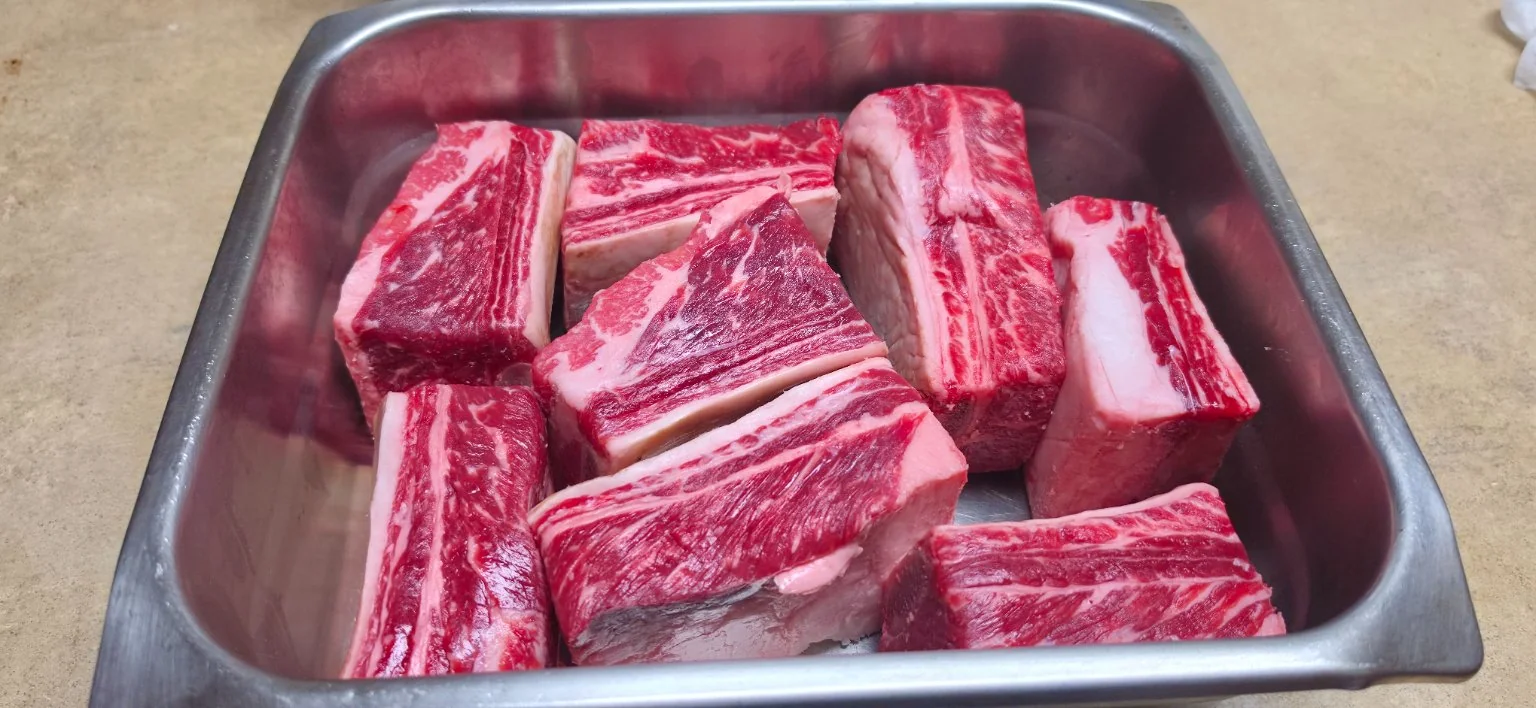
About seven pounds of thick, meaty beef short ribs ready for the corned beef brine.
The Corned Beef Brine
I used the same corned beef brine recipe I have relied on for years.
Brine Ingredients
- 1 gallon water
- 2 cups kosher salt
- 1/2 cup sugar
- 1 ounce Insta-Cure #1 or an equivalent Cure #1 product
- 2 tablespoons pickling spice
Brining Instructions
- Combine the water, kosher salt, sugar, curing salt, and pickling spice in a pot large enough to hold the beef ribs comfortably.
- Bring the mixture to a gentle simmer, stirring until the salt and sugar are completely dissolved.
- Remove the brine from the heat and allow it to cool.
- Refrigerate the brine until it is completely chilled.
- Place the beef ribs in the cold brine, making sure they remain fully submerged.
- Refrigerate while the ribs cure.
Because the ribs were thinner than the larger roasts I normally use for corned beef, I initially considered pulling them after three days instead of leaving them for the full five. In the end, they remained in the brine for five days before being rinsed, soaked, seasoned, and cooked.
From Brine to Grill
After five days in the brine, I pulled the beef ribs out and gave them a thorough rinse. They also need to soak in fresh water to draw out the excess salt. I normally change the water and continue soaking until it runs clear.
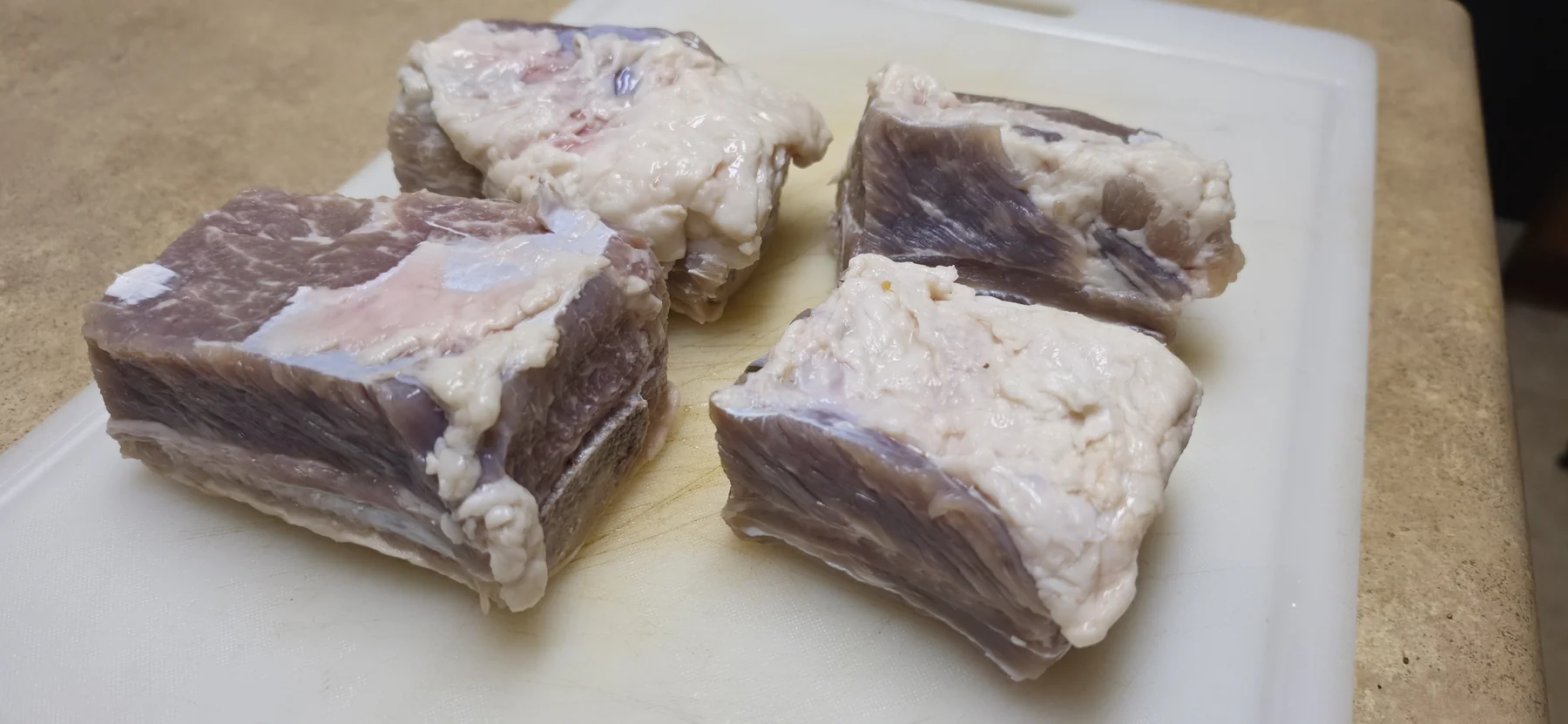
The ribs after their five-day brine, rinse, and fresh-water soak.
After the ribs were rinsed and patted dry, they received a liberal coating of PyroDust Steak Seasoning.
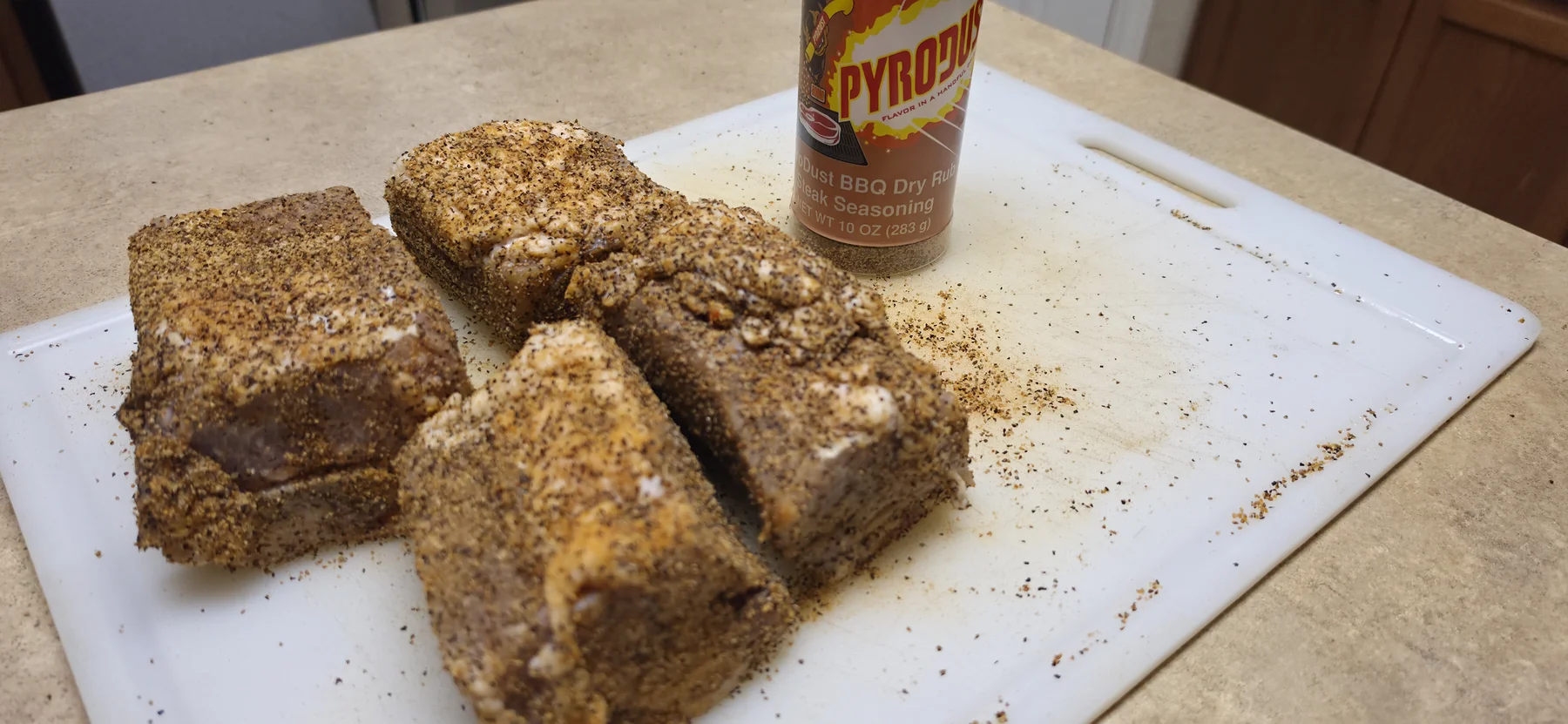
A liberal coating of PyroDust Steak Seasoning before the ribs went onto the grill.
It is not a traditional pastrami seasoning, but I have used it before on corned beef that I turned into pastrami-style barbecue. The pepper, garlic, salt, mustard, and celery flavors work well with the cured beef.
Onto the Grill
The ribs went onto the grill over indirect heat. From there, it was mostly a matter of letting the heat and smoke slowly build color, bark, and tenderness.
Beginning of the Cook
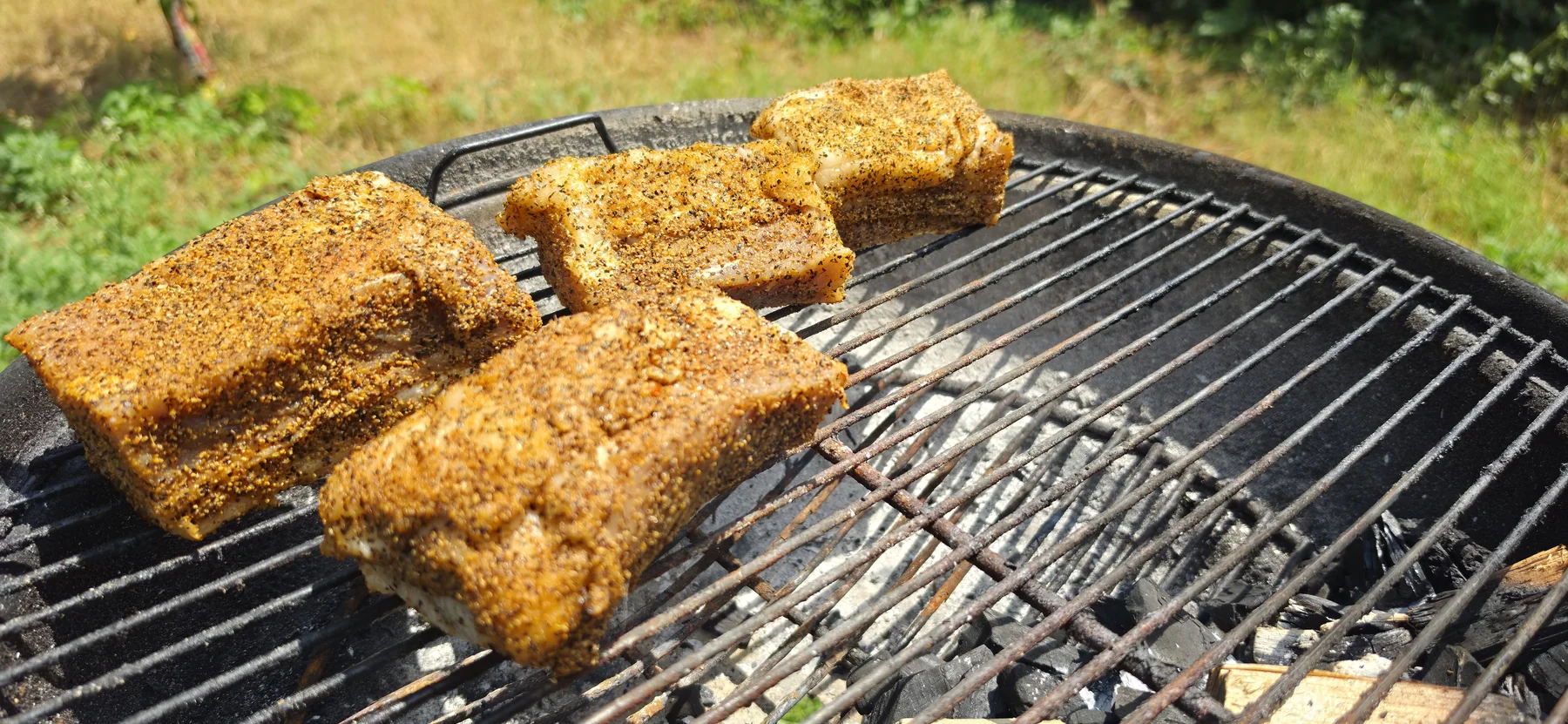
The ribs at the beginning of the indirect cook, before the bark and deep color developed.
Bark and Color Starting to Develop
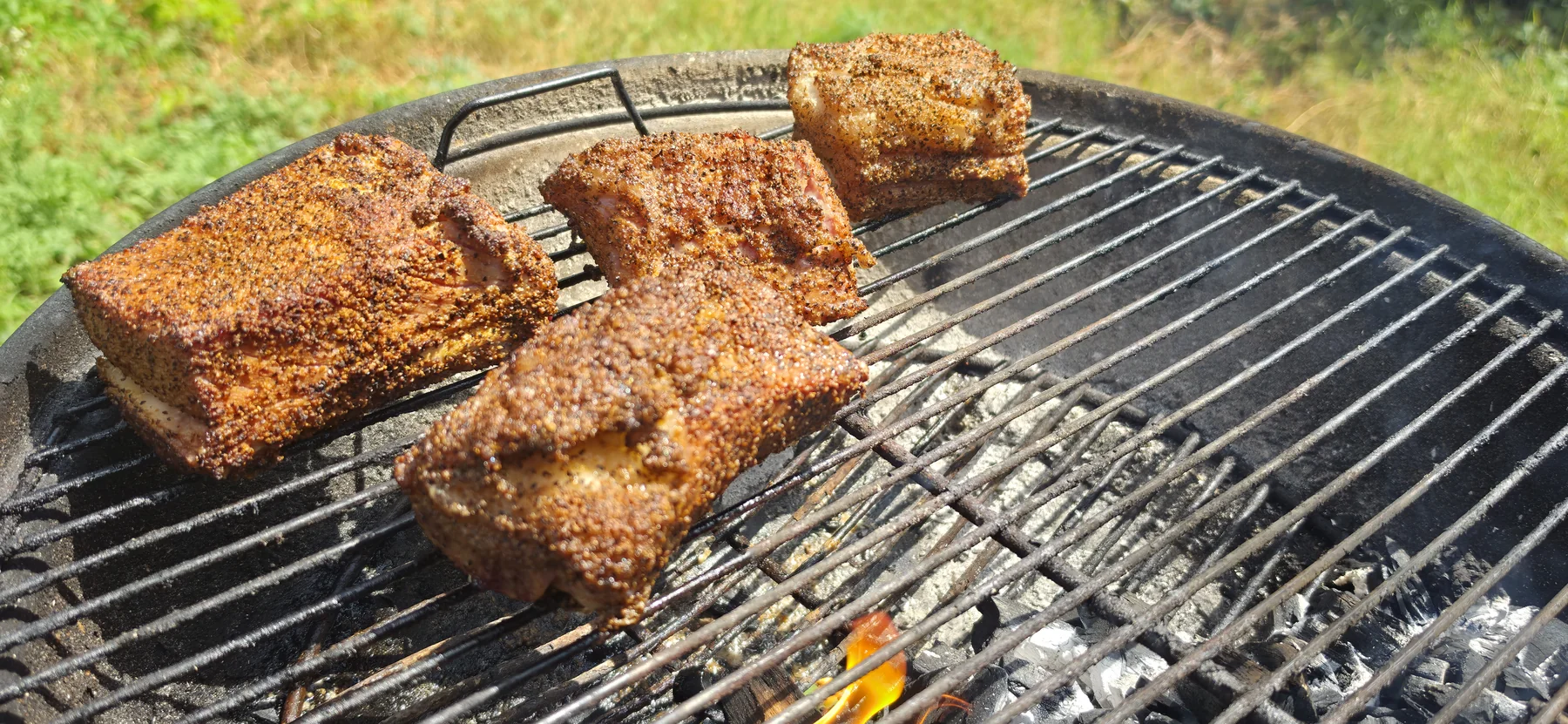
The surface darkened as the seasoning set and the fat began to render.
Late in the Cook
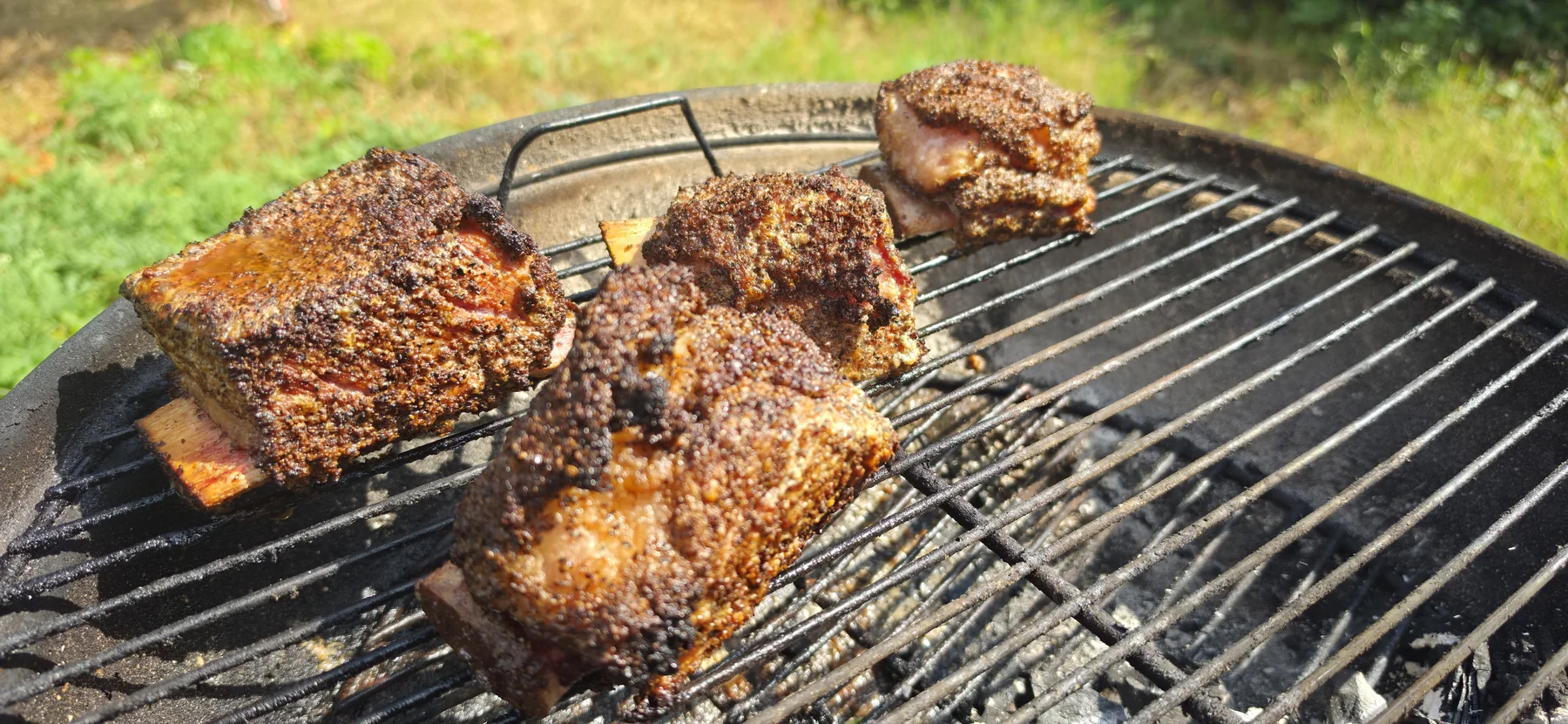
Late in the cook, the bark had set and the ribs were approaching tenderness.
I pulled the ribs once they were probe-tender, then let them rest for a few minutes before cutting into them.
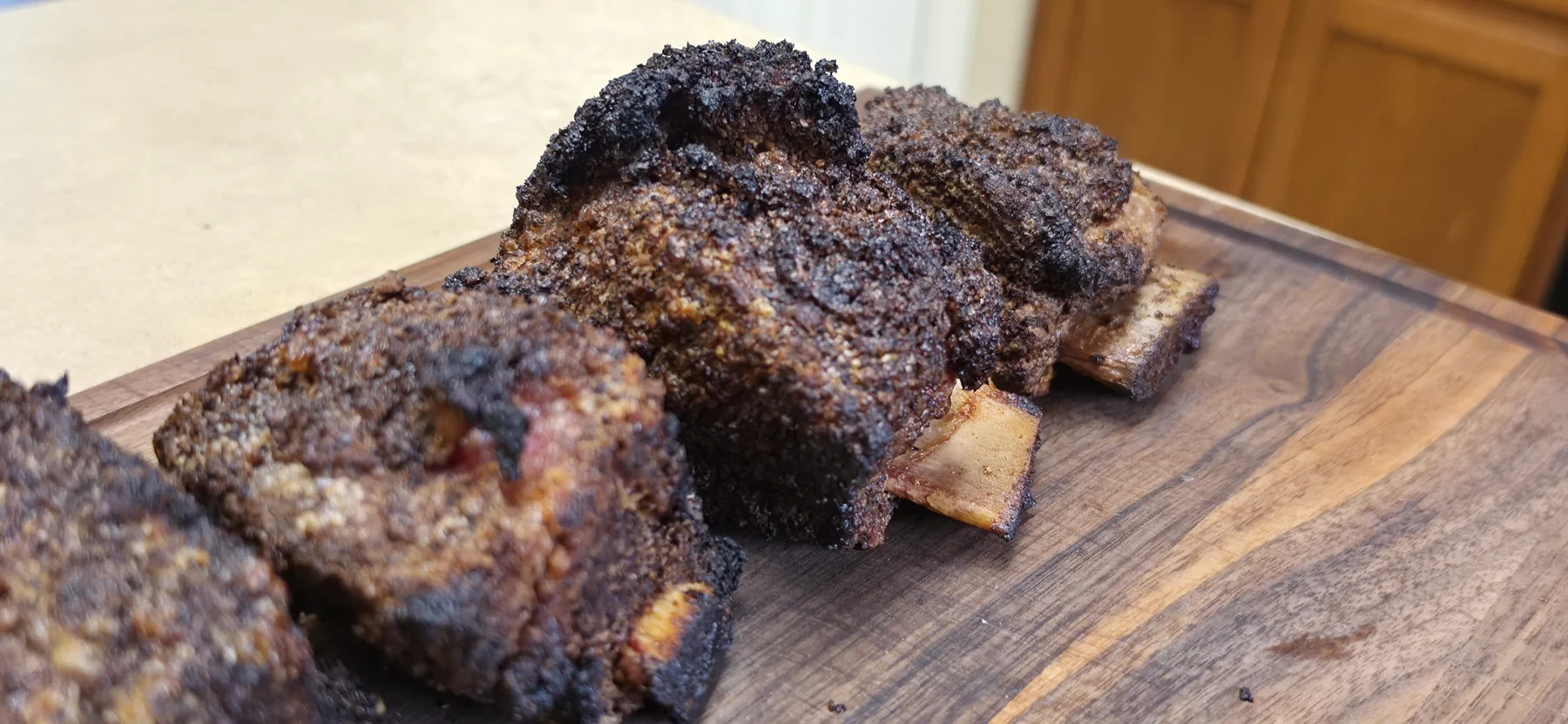
Finished, probe-tender, and resting before the first rib was opened.
The Final Result
The ribs definitely developed the deep red cured color you expect from corned beef. The outside had a dark, peppery bark, while the inside remained moist and pulled apart easily.
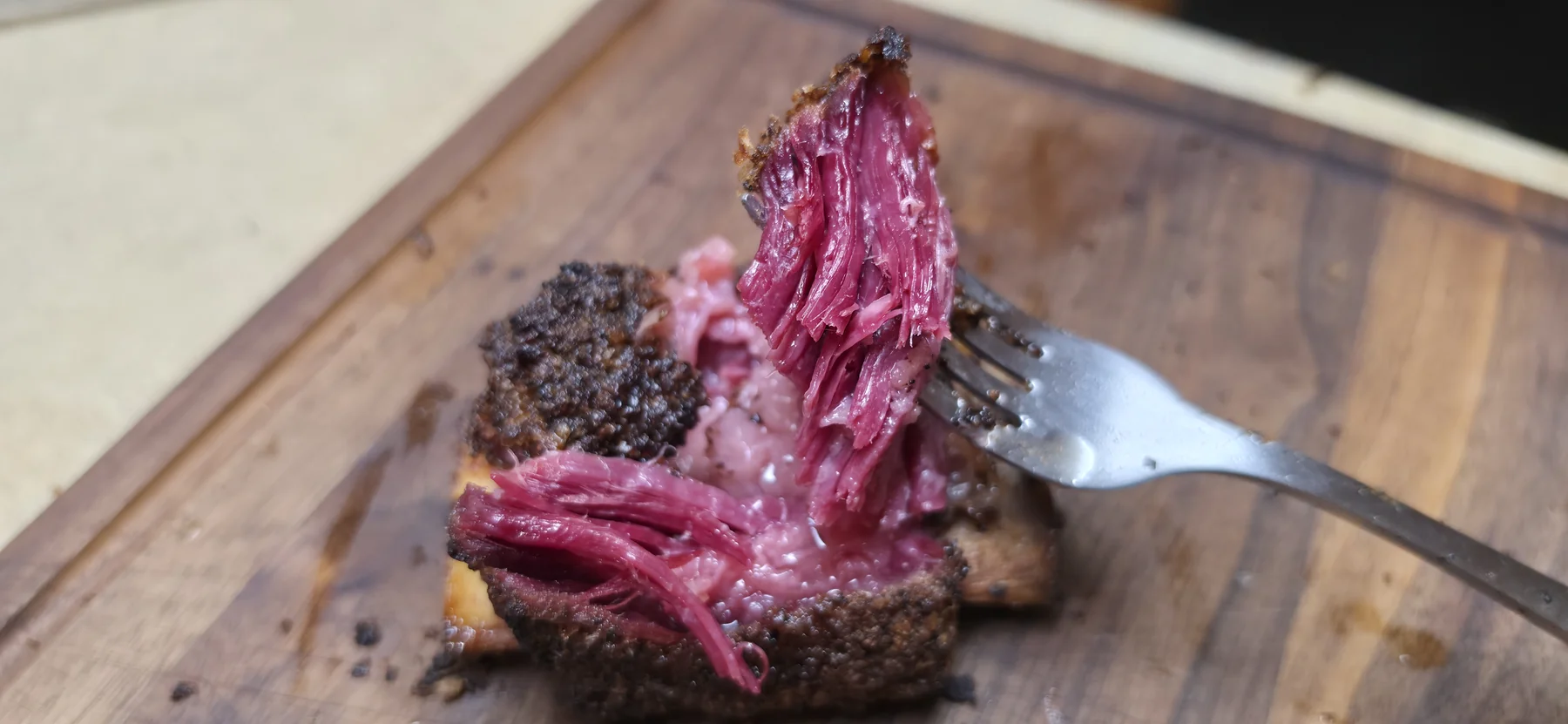
The deep cured-red interior, moist pulled beef, and dark bark were exactly what I wanted from the experiment.
They did turn out a little saltier than I wanted because I rushed the rinsing and soaking process. That is the step I would give more time next time.
Flavor in a Handful of Dust.