If you’ve only ever had mustard from a squeeze bottle, the first taste of homemade beer mustard can catch you off guard.
Fresh mustard has a bold, sharp heat that store-bought mustard usually doesn’t have anymore. It has that nose-clearing kick that makes some people think there has to be horseradish in it. That punch is just what fresh mustard tastes like when it’s made from powder and mixed fresh.
That’s what makes this homemade beer mustard recipe so good.
The mustard brings the bite, the beer adds a malty backbone, and the PyroDust Medium BBQ Dry Rub adds savory depth that makes this mustard right at home on brats, burgers, smoked sausage, ham sandwiches, pretzels, pork, and barbecue plates.
Best of all, it’s simple. No complicated process, no special equipment, just mustard powder, beer, seasoning, and a little time.
Why Fresh Mustard Tastes So Different
Most people are used to prepared mustard that has already mellowed in the jar. Homemade mustard is different from the moment you mix it.
Right away, the flavor can be intense... sharp, spicy, and almost sinus-clearing. That’s why people sometimes mistake fresh mustard for horseradish, especially if they’ve never had mustard made fresh from powder before. It has that same kind of upper-nose heat, but it is still very much mustard.
That heat doesn’t stay that intense forever. As the mustard rests, the flavor begins to round out and mellow. What starts with a fiery bite becomes smoother, deeper, and more balanced over time.
That is one of the best parts of making it yourself. You get to decide where in that process you like it best.
Why Beer Works in Mustard
Beer does more than just add liquid.
In a homemade beer mustard recipe, the beer gives the mustard body, depth, and a rich malty note that makes it taste fuller and more substantial. Instead of tasting flat, it comes out earthy, tangy, savory, and bold.
Then the PyroDust Medium BBQ Dry Rub adds another layer of flavor. It brings in savory seasoning and a barbecue-friendly note that makes this mustard fit naturally alongside grilled and smoked meats.
The finished mustard should be thick, creamy, and loaded with flavor. It should not fade into the background. It should stand up to the food and bring something to the plate.
Homemade Beer Mustard Ingredients
This rough ratio works well:
-
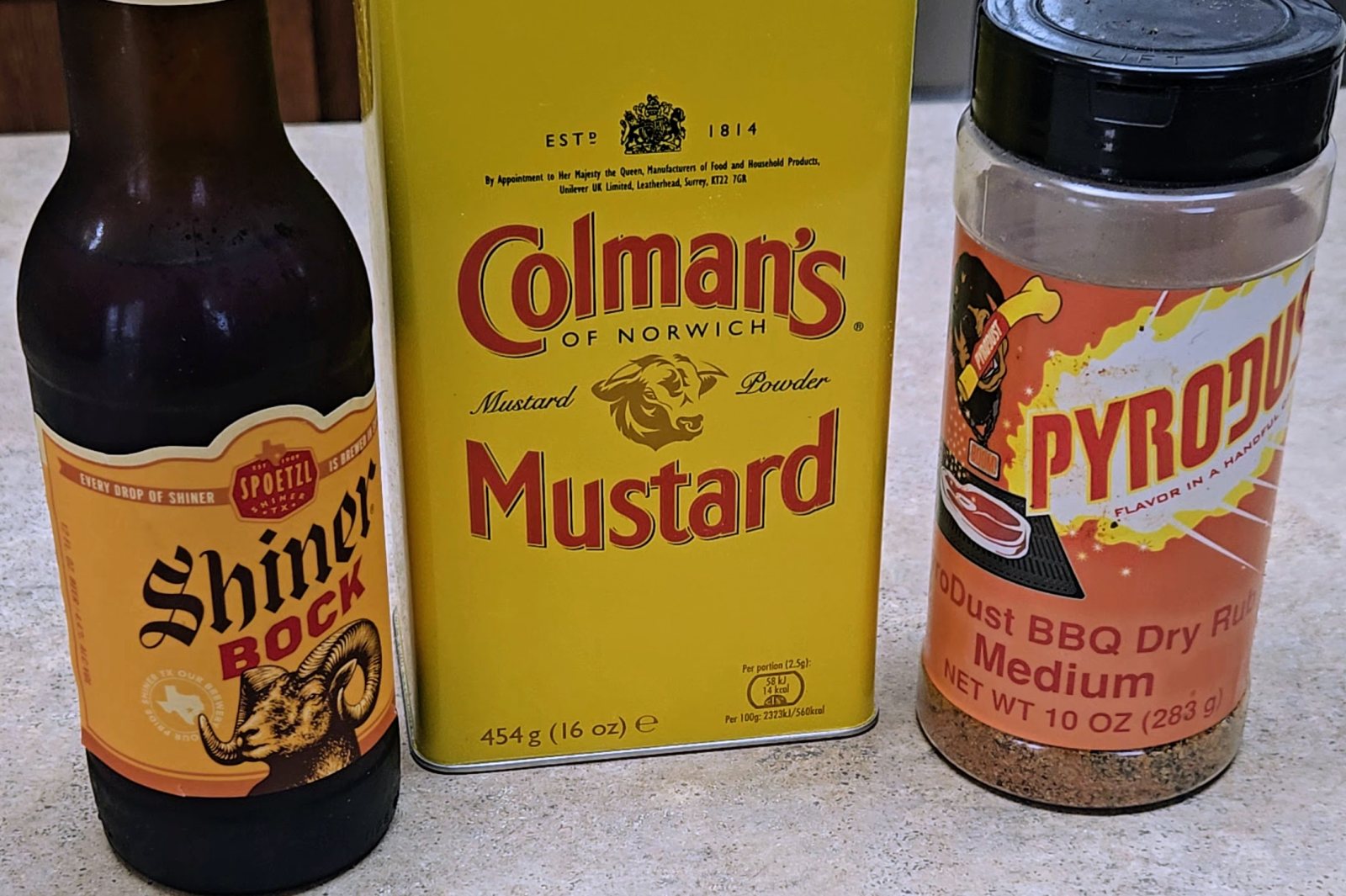
2 cups Colman’s mustard powder
-
1 bottle of beer
-
2 to 3 tablespoons PyroDust Medium BBQ Dry Rub
This is more of a feel recipe than a strict formula, and that is part of the appeal.
Start there, then adjust as needed. If the mustard is too thick, add a little more liquid. If it is too thin, add more mustard powder.
A thicker batch makes a great sandwich spread. A slightly thinner batch works well for sausages, dipping, or even brushing onto meat.
How to Make Beer Mustard
Making homemade beer mustard is straightforward.
Method
-
Add 2 cups of Colman’s mustard powder to a bowl or container.
-
Pour in 1 bottle of beer and stir until the mixture starts to smooth out.
-
Add 2 to 3 tablespoons of PyroDust Medium BBQ Dry Rub.
-
Stir until fully combined.
-
Check the consistency and adjust if needed.
-
Add more mustard powder to thicken
-
Add more beer or other liquid to thin
-
-
Taste the mustard and let it rest until the heat and flavor settle where you want them.
-
Once it reaches the flavor you like, store it in the refrigerator.
That is all it takes. Simple ingredients, simple method, big flavor.
Why Homemade Mustard Gets Mistaken for Horseradish
This happens because most people have never tasted mustard this fresh.
When mustard powder is mixed with liquid, it develops a sharp, lively heat that can rush upward and hit the nose in a way that feels similar to horseradish. If someone is only used to mild prepared mustard, that kind of bite can be surprising.
It does not mean there is horseradish in the recipe. It just means the mustard is fresh and still carrying that strong heat.
That sharpness is one of the things that makes homemade mustard so good.
How the Heat Mellows Over Time
One of the most important things to know about homemade mustard is that the flavor changes as it sits.
Right after mixing, the mustard is usually at its hottest and sharpest. As it rests, the heat starts to soften and the flavor becomes more rounded and balanced.
So if the batch tastes a little too aggressive at first, that does not mean anything went wrong. It usually just needs more time.
The mustard you taste right after mixing is not always the mustard you will taste the next day.
Counter vs. Fridge, How to Control the Heat
This is one of the easiest ways to shape the final flavor.
If you want the mustard hotter and sharper, refrigerate it sooner. That helps hold onto more of the fresh bite.
If you want it mellower, let it sit out for a few hours before moving it to the fridge. That extra rest time helps take some of the edge off.
A simple way to handle it is this:
-
For a bolder, sharper mustard, chill it sooner
-
For a smoother, mellower mustard, let it sit out for a few hours first
-
Taste it along the way and refrigerate it when it hits the flavor you like
That counter-versus-fridge timing is one of the easiest ways to control the final flavor of homemade beer mustard.
Tips for Better Homemade Beer Mustard
A few simple things help a lot:
-
Use enough beer to fully hydrate the mustard powder
-
Stir well so there are no dry pockets hiding in the mix
-
Do not judge the flavor too early
-
Adjust the thickness with more mustard powder or more liquid as needed
-
Let the mustard rest before deciding whether it needs anything else
And most importantly, do not mistake that early heat for something being wrong. That fiery kick is part of what makes fresh mustard so good.
Homemade Beer Mustard Recipe
Ingredients
-
2 cups Colman’s mustard powder
-
1 bottle of beer
-
2 to 3 tablespoons PyroDust Medium BBQ Dry Rub
Instructions
Add the mustard powder to a bowl or container. Pour in the beer and stir until mostly smooth. Add the PyroDust Medium BBQ Dry Rub and continue stirring until fully combined.
Check the consistency and adjust as needed. Add more mustard powder if you want it thicker, or more beer if you want it thinner.
Taste it fresh if you want the full heat, then let it rest until the flavor mellows to your liking. Once it gets where you want it, refrigerate it.
Best Uses
-
Brats
-
Smoked sausage
-
Burgers
-
Ham sandwiches
-
Pretzels
-
Pork sandwiches
-
Barbecue plates
Final Thoughts
This is one of those old-school recipes that proves simple does not mean boring.
A few basic ingredients become something bold, fresh, and full of character. This homemade beer mustard recipe has more heat, more depth, and more personality than most mustard you will ever buy in a store.
Once you make it fresh, you will understand why people get hooked on it.
And when somebody takes a bite and asks if there is horseradish in it, you will know exactly what to tell them.
Nope. That is just what fresh mustard tastes like.